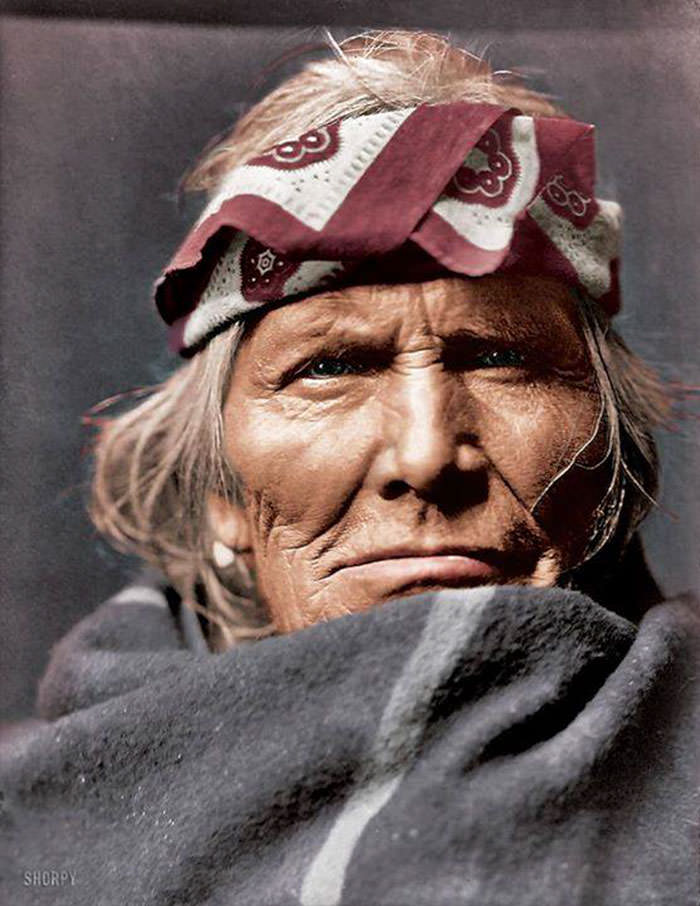
Weathered lines and a steady, unsmiling gaze make Si Wa Wata Wa feel close across the century, an elder of the Zuni people photographed in New Mexico in 1903. The portrait is tightly framed, drawing attention to the patterned headscarf and the soft fall of gray hair, while a heavy blanket wraps the shoulders in broad, dark bands. Colorization adds warmth to the skin tones and cloth, turning a familiar Edward S. Curtis composition into something newly immediate for modern viewers.
Curtis’s camera lingers on texture—creases at the brow, the set of the mouth, the worn fabric—inviting the eye to move slowly and respectfully. With no busy background to distract, the face becomes the landscape, marked by age and experience rather than ornament. The directness of the pose suggests a moment of quiet endurance, the kind of presence that refuses to be reduced to a mere “type” in early twentieth-century imagery.
Seen today, the photograph prompts two kinds of attention at once: admiration for its artistry and reflection on how Indigenous communities were documented and interpreted through outsider lenses. As a historical photo of a Zuni elder, it remains a powerful entry point into conversations about Native American portrait photography, visual archives, and the complicated legacy of Edward S. Curtis. The added color does not change the past, but it can sharpen our focus on the person at the center—an individual who still meets the viewer’s eyes.