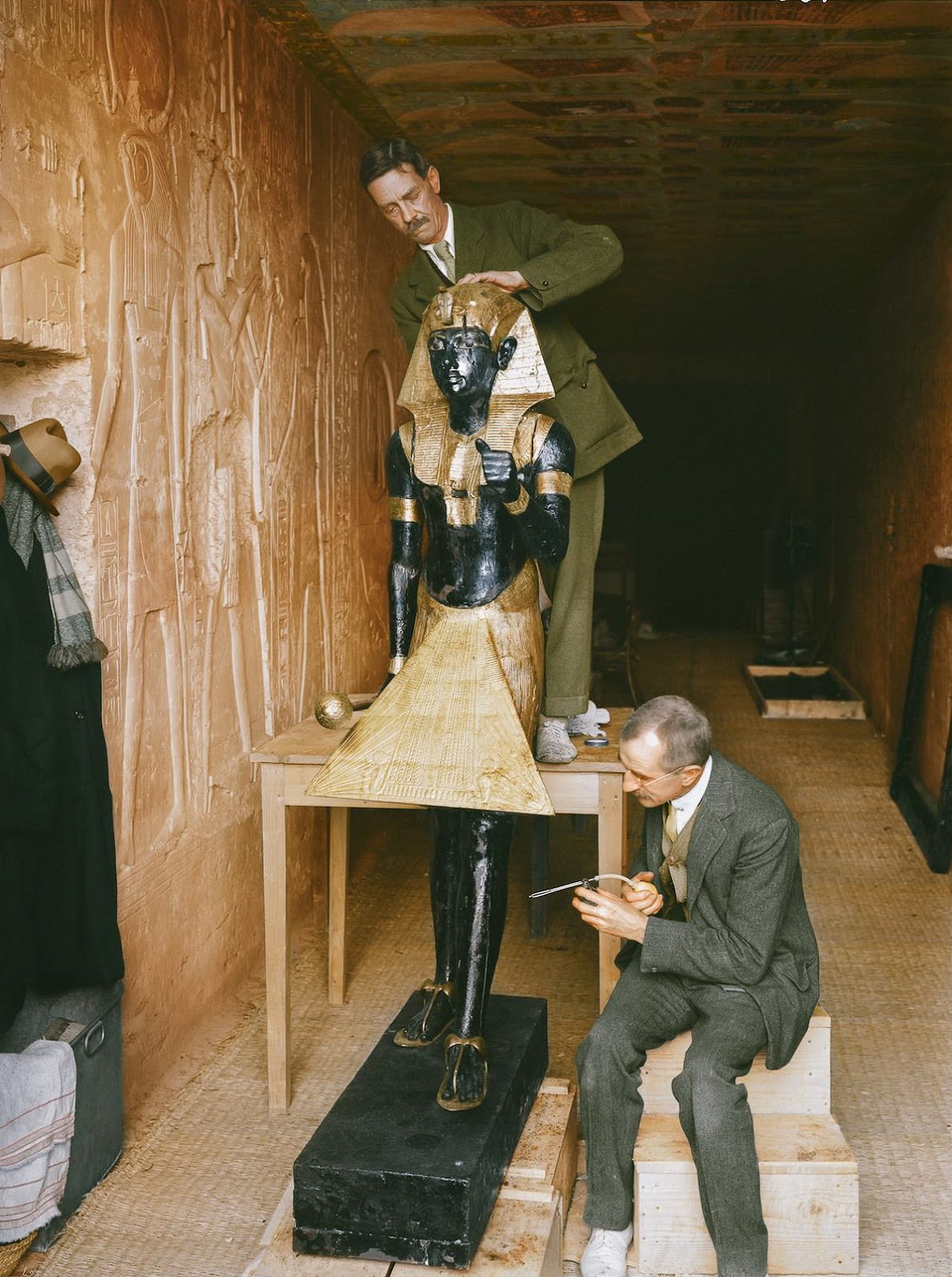
Deep in the painted corridors of Sethos II’s tomb (KV 15), a makeshift “laboratory” has been improvised from plain timber, crates, and whatever tools could be carried underground. The colorization brings out the warm ochres of the carved walls and the dim, tunnel-like space beyond, where the workbench becomes an island of order against ancient stone. Hanging clothing and stacked boxes hint at long hours spent below the desert light, with conservation happening right where the archaeology unfolded.
At the center stands one of the famous sentinel statues from the antechamber (Carter no. 22), its glossy black surface and gold details catching every scrap of illumination. Arthur Mace, positioned behind the figure, steadies the head and headdress as if adjusting a crown, while Alfred Lucas sits close at hand, intent on the delicate business of repair. Their modern suits and careful posture contrast with the timeless stance of the guardian, emphasizing how fragile newly uncovered artifacts could be once removed from their sealed environment.
Dated 4th January 1923, the scene is a vivid reminder that discovery was only the beginning, and that early 20th-century Egyptian tomb conservation relied on patience, chemistry, and improvisation as much as spectacle. Readers searching for Howard Carter-era conservation, King Tutankhamun tomb artifacts, or the practical realities of field laboratories will recognize the significance of this moment: preservation happening in real time, inches from painted reliefs, with the statue’s survival depending on steady hands. Even in color, the image retains a quiet tension—an ancient guardian watched over by two men tasked with keeping it intact for the future.