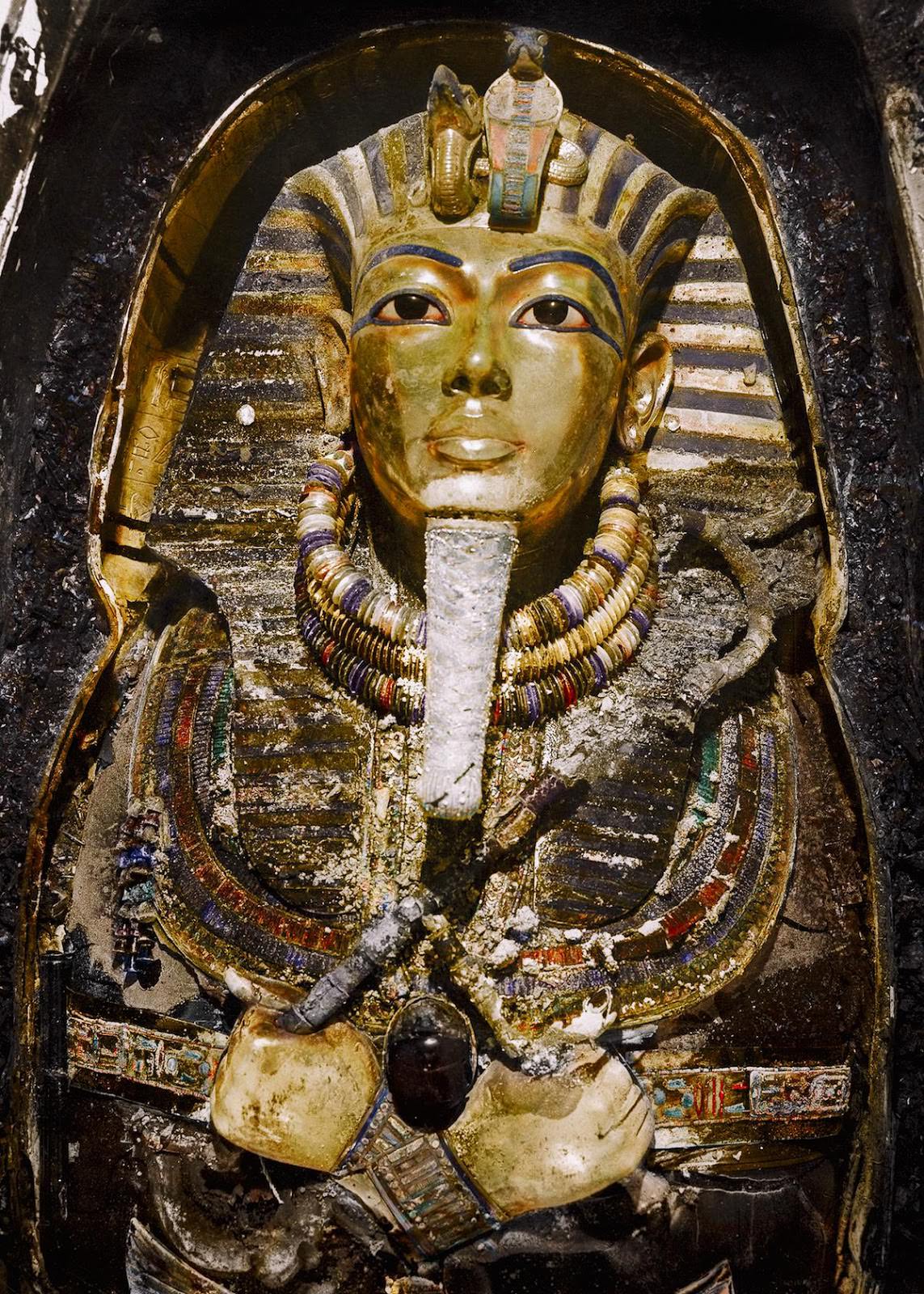
Gleaming from the darkness of the burial chamber, the gold mask (Carter no. 256a) rests exactly where it was found—on the mummy of the King, still enclosed within the third, innermost solid gold coffin (Carter no. 255). The colorization draws the eye to the serene face, the striped nemes headdress, and the crisp inlays that define the brows and eyes, making the famous funerary portrait feel startlingly present rather than remote. Even in this close view, the surrounding shadows hint at the tight confines and careful handling required inside Tutankhamun’s Tomb.
What stands out is the contrast between idealized perfection and the rough reality of excavation: gold surfaces catch the light while brittle linens and darkened resinous deposits cling around the chest and shoulders. Layered necklaces and protective elements lie crowded together, their beads and metalwork forming bands of color against the muted, dusty textures around them. The mask’s calm expression, framed by the cobra and vulture emblems on the brow, suggests royal authority and divine protection—motifs meant to endure long after the burial rites were completed.
Dated in the title to 30th October 1925, the scene belongs to a later stage of work in the tomb, when documentation and cataloguing had to match the delicacy of what was being revealed. For readers searching for Tutankhamun’s gold mask in situ, Howard Carter catalogue numbers, or the anatomy of the innermost coffin, this image provides a rare, intimate perspective on how the object originally lay—before museum lighting and glass cases transformed it into a standalone icon. Seen this way, the mask is not merely a masterpiece of ancient Egyptian art, but part of a tightly arranged system of burial, belief, and painstaking modern discovery.