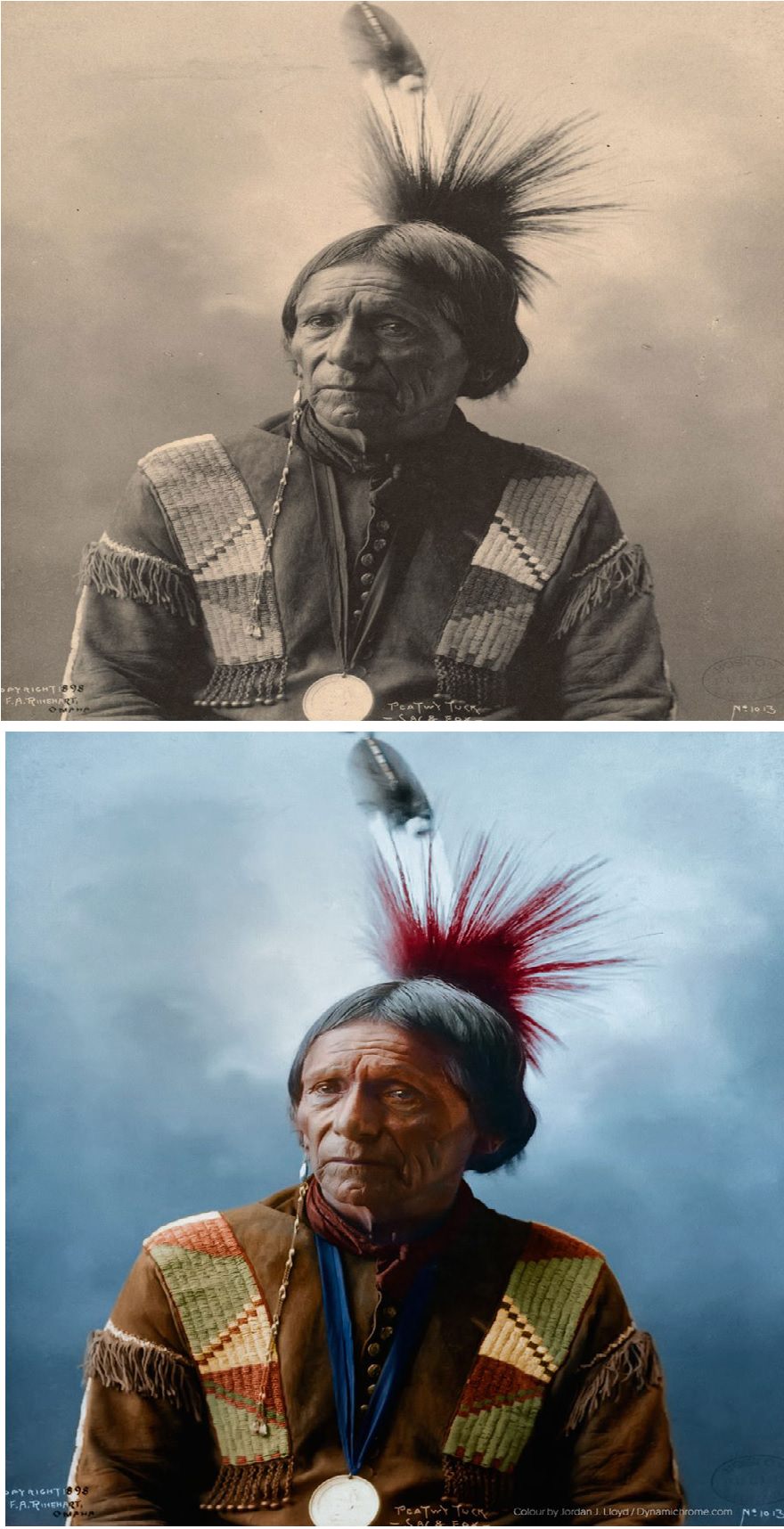
Peatwy Tuck of the Meskwahki appears in a composed studio portrait from 1898, meeting the viewer with a steady, unsentimental gaze. Fine lines across the face and the set of the mouth suggest a life of experience, while the plain backdrop keeps attention fixed on the person rather than the setting. Details like the hair style and the upright feathered adornment create a striking silhouette, turning a formal sitting into something intensely memorable.
The clothing and ornamentation reward a closer look: a fringed outer garment, patterned shoulder pieces that read as carefully constructed rather than merely decorative, and a round medal-like pendant hanging at the chest. Even without a named place in the frame, the photographer’s controlled lighting and crisp focus make the textures—fabric, fringe, beadwork or quillwork, and skin—feel immediate. For anyone researching Meskwahki history, Native American portraits, or late-19th-century photographic practice, the image offers both a personal presence and a record of material culture.
Colorization adds another layer to the post, inviting modern eyes to notice what monochrome can mute: contrasts between garments, the warmth of skin tones, and the bold accent of the headpiece against the cool background. Used thoughtfully, this approach doesn’t replace the original; it complements it, encouraging questions about how the portrait was staged and how viewers then—and now—interpret it. Together, the original and the color version make an accessible entry point for readers exploring Indigenous portrait photography and the enduring visibility of the Meskwahki community.