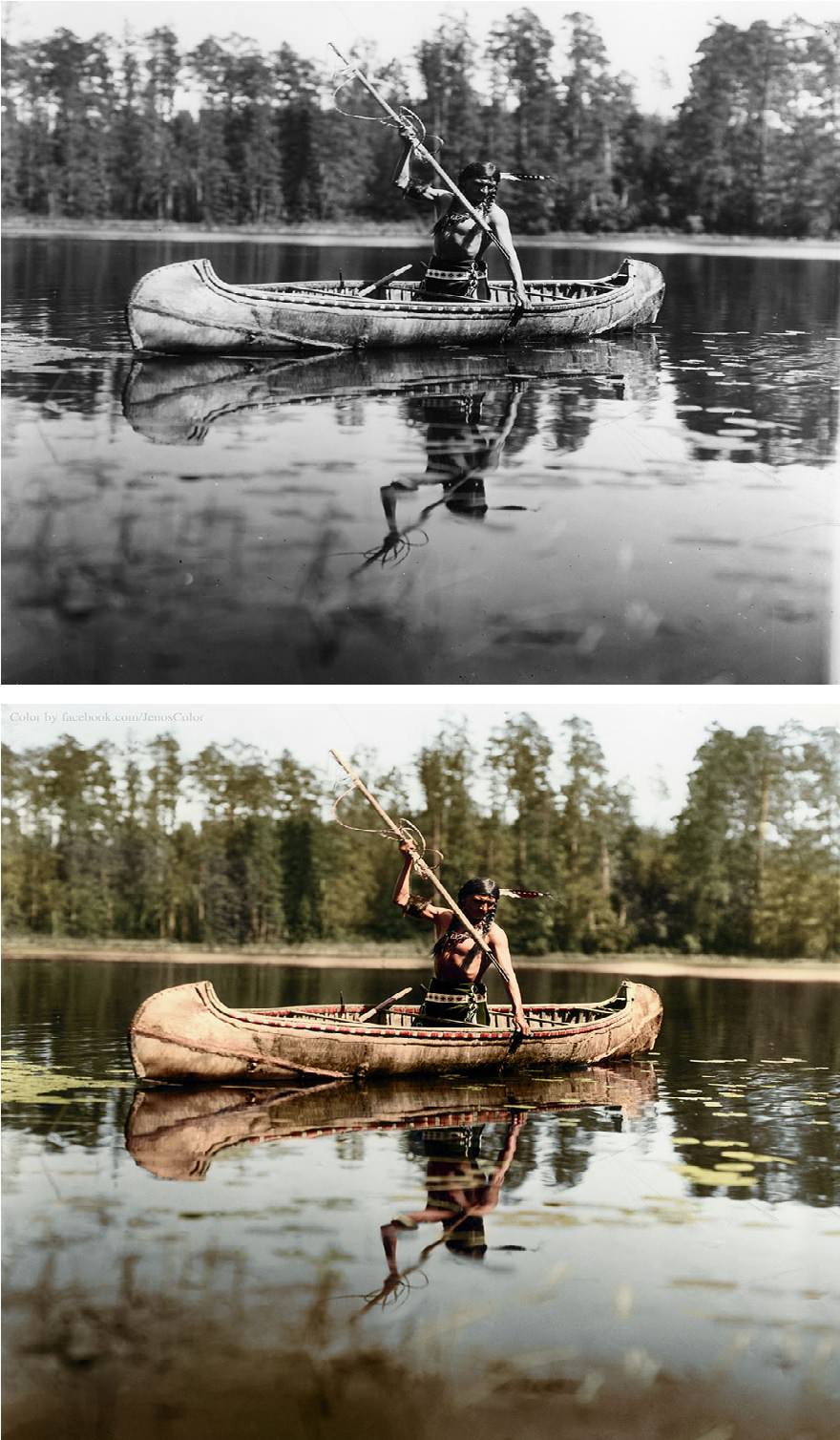
A narrow canoe glides on still Minnesota water as an Ojibwe spearfisher rises to strike, arm lifted and poised with a long, multi-pronged spear. The lake’s surface mirrors the figure and boat so clearly that the reflection feels like a second scene unfolding beneath the ripples. Behind, a dense line of trees anchors the moment in the North Woods landscape that shaped everyday life and seasonal work.
Spearfishing demanded practiced balance and sharp observation, and the photograph freezes that instant of concentration—body angled, eyes fixed, tool held high. Details like the canoe’s worn texture and the calm shallows suggest a method tuned to quiet waters where fish could be spotted and taken with precision. As a historical image from 1908, it offers more than a picturesque view; it hints at knowledge passed through generations and the close relationship between community, water, and sustenance.
Colorization adds another layer to the story, bringing warmth to the wood tones and depth to the forest backdrop while keeping the composition’s documentary strength. For readers searching for Ojibwe history, Native American spearfishing, or early 20th-century Minnesota life, the scene provides a vivid entry point into traditional practices on the region’s lakes. The result is a striking blend of artistry and record—an enduring glimpse of skill, environment, and continuity.