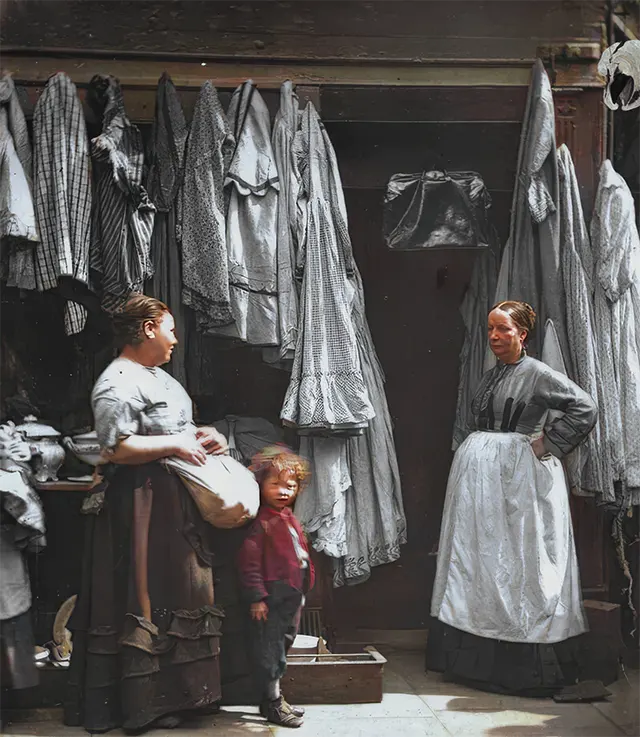
A narrow secondhand clothing shop in St. Giles becomes a stage for everyday survival in the 1890s, with garments crowding the walls like a fabric archive. Dresses, aprons, and shirts hang in dense rows, their folds and patterns made newly legible through colorization. The cramped interior hints at a brisk trade where space is precious and every usable inch is turned into display.
At the center stand two women and a small child, framed by the merchandise as if caught mid-transaction. One woman holds bundled cloth, the other waits with an appraising posture, while the child lingers between them—curious, restless, and very much part of the scene. Their plain workwear and practical aprons evoke the rhythms of working-class London, where clothing was repaired, resold, and repurposed long before “sustainable fashion” had a name.
Beyond the figures, the shop’s textures tell their own story: worn hems, sturdy fabric, and the quiet economy of necessity that shaped daily life in historic St. Giles. For readers interested in Victorian street life, secondhand markets, and the material culture of the 1890s, this colorized photograph offers an intimate glimpse into commerce on a human scale. It reminds us that history often lives not in grand events, but in small rooms filled with used clothes and ordinary decisions.