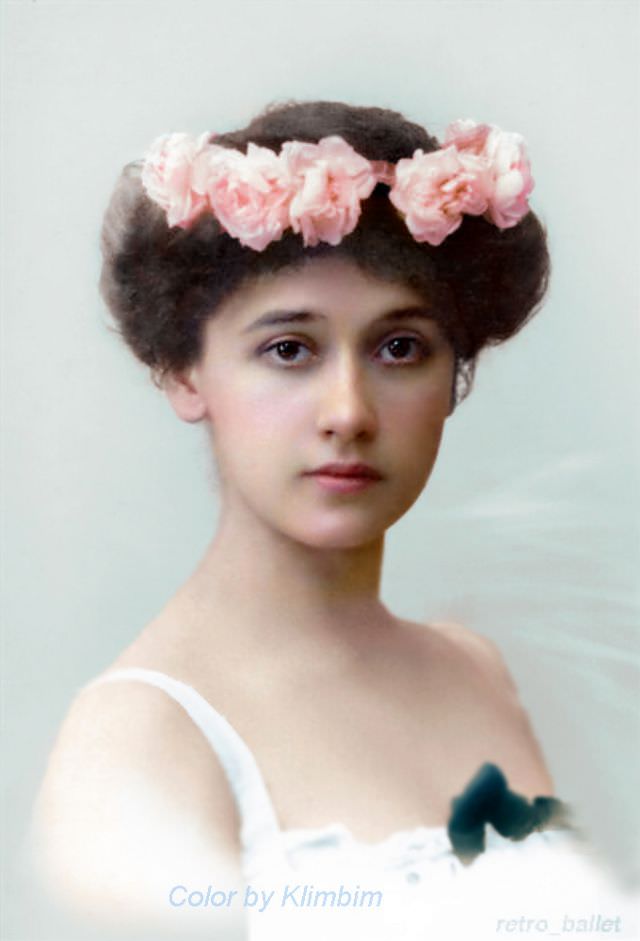
Tamara Karsavina appears here in a softly colorized portrait that feels both intimate and stage-ready, a young woman framed by a pale backdrop and an air of quiet poise. Her hair is arranged in a broad, elegant sweep, crowned with a garland of pink blossoms that draws the eye upward and echoes the romantic tastes of early 20th-century portraiture. The gentle tones of the colorization emphasize the smooth gradations of skin, the calm gaze, and the carefully controlled stillness expected of a professional sitter.
At the neckline, delicate straps and a light bodice suggest ballet attire rather than everyday dress, with a small dark bow providing contrast against the whites and creams. The composition keeps distractions to a minimum, directing attention to expression and costume detail—exactly the kind of studio presentation that helped dancers and performers craft a public image in the 1900s. Subtle blush in the cheeks and the soft pinks of the flowers give the portrait a lifelike warmth while preserving its period character.
For readers interested in Tamara Karsavina, ballet history, and early photographic portraiture, this colorized image offers a vivid bridge between the archival world and the present. Colorization can never replace the original, but it can sharpen our sense of texture, styling, and atmosphere, making it easier to imagine how such a portrait might have felt to contemporary audiences. Whether you’re browsing for Edwardian-era aesthetics or iconic figures of dance, this post highlights a graceful face from the 1900s with renewed immediacy.