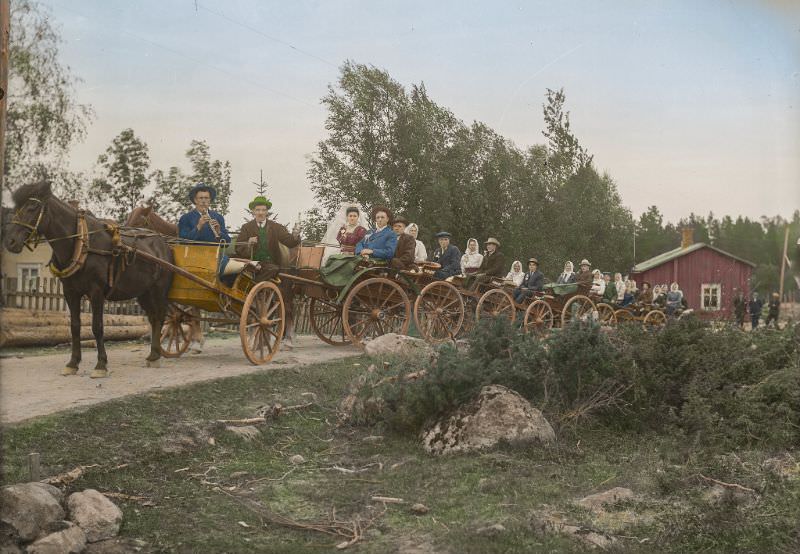
Along a country road in Ostrobothnia’s Swedish-speaking communities, a wedding cortege rolls toward church in 1913, the procession stretched out in a rhythmic line of horse-drawn carts. The lead wagon sits high on wooden wheels, its bright paint and tidy harness catching the eye, while drivers and guests ride close together, dressed for a day that mattered. Behind them, more carts follow in sequence, turning an ordinary roadside moment into a moving celebration.
Faces and fabrics tell their own story: women in light headscarves and layered dresses, men in caps and dark jackets, and a bride-like figure in pale attire seated among companions. The colorization adds warmth to the scene without smoothing away the textures of rural life—dusty road, weathered timber, and the simple geometry of wagons built for work yet pressed into service for ceremony. Even the horses seem to know their role, steady and patient at the front of the line.
In the background, a red wooden building and a fence line anchor the cortege in a distinctly Finnish countryside setting, framed by trees and open ground strewn with stones. For anyone interested in Finnish history, Ostrobothnia heritage, or traditional Nordic wedding customs, this photograph offers more than a charming tableau; it suggests how community, faith, and seasonal routines met on the road to the church door. Seen today, the long procession feels like a reminder of how public and communal a wedding could be, with the journey itself becoming part of the rite.