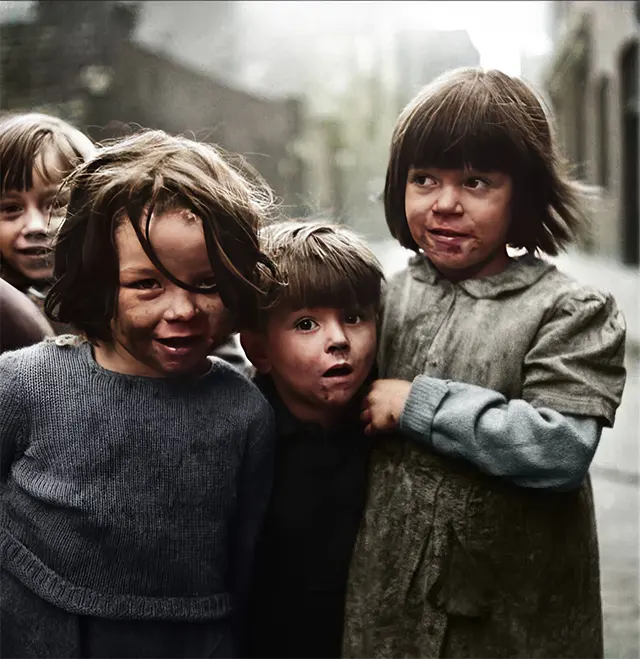
Grimy faces and wary half-smiles crowd the foreground as several children press together on a narrow street, their expressions swinging between curiosity and exhaustion. The colorization brings out the lived-in textures—mud on cheeks, frayed knitwear, and the heavy, dull tones of clothing that looks made to last through hard use rather than to charm. Behind them, the blurred brickwork and close-built buildings hint at the tight, airless streets associated with London’s East End poverty.
Set in Stepney in 1895, the scene speaks to the realities of slum life at the end of the Victorian era, when overcrowding and irregular work shaped childhood as surely as any schoolroom. The children’s direct gaze invites uncomfortable questions about public health, housing, and the thin line between play and survival in working-class districts. Even without named individuals, the photograph operates as a document of social conditions—an unvarnished counterpoint to the period’s prosperity and imperial confidence.
Colorization changes how we read the past: it collapses distance, turning a “then” that feels safely remote into something immediate and familiar. Skin tones, fabric shades, and the damp, smoky atmosphere lend the image a present-tense urgency that black-and-white can soften. For readers searching for Stepney slum history, Victorian London street life, or the everyday experience of poor children in 1895, this restored photograph offers a stark, human entry point into the era’s inequalities.