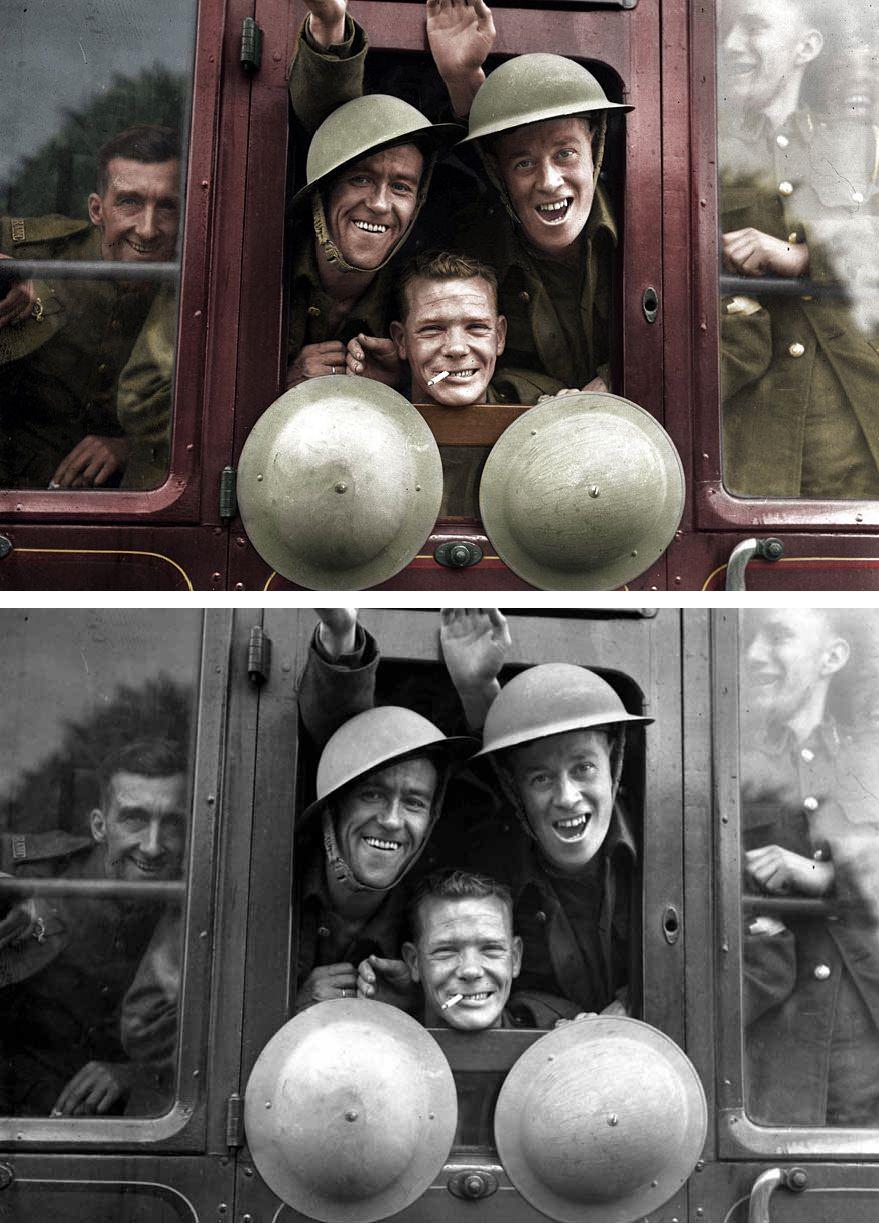
Leaning out of a crowded carriage window, a cluster of British soldiers grin and wave as their train sets off on the first leg of the journey toward the Western Front. Steel helmets catch the light, faces press close in the frame, and one man keeps a cigarette clenched between his teeth, as if determined to look carefree for whoever is watching from the platform. The carriage itself, with its dark-painted panels and window fittings, anchors the moment in the everyday machinery of wartime movement—ordinary rail travel repurposed for an extraordinary task.
Dated September 20, 1939 in England, the scene sits at the tense opening of the Second World War, when departures were swift and the future still unreadable. The mood here is strikingly upbeat: broad smiles, raised hands, and playful closeness suggest a performance of confidence as much as genuine excitement. In images like this, cheer can be both emotion and armor—an attempt to reassure families, friends, and the camera that duty will be met without fear.
Colorization adds a new layer of immediacy, pulling the viewer closer to the textures of uniform cloth, the sheen of helmets, and the lived-in surface of the train. It’s a reminder that behind strategic headlines and mobilization orders were young men in transit, packed shoulder-to-shoulder, turning a departure into a brief, bright spectacle. For readers searching WWII home front stories, British Expeditionary Force departures, or early-war railway scenes, this photograph offers a vivid doorway into the human face of 1939.