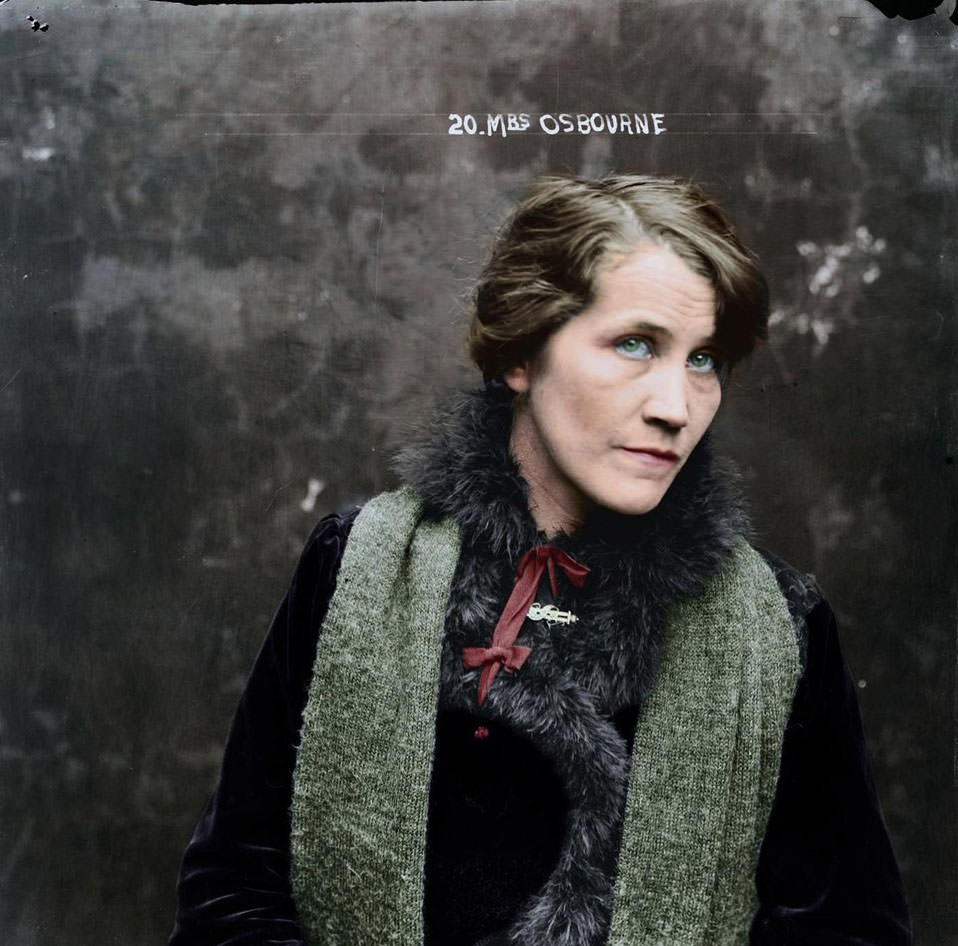
Mrs Osbourne meets the camera with a steady, unsmiling gaze, her face turned slightly aside as if interrupted mid-thought. The colorization brings forward striking details—cool-toned eyes, the soft sheen of neatly arranged hair, and the contrast between dark clothing and a textured outer layer that reads like a heavy wrap or vest. Behind her, a plain backdrop and the simple label above her head keep attention fixed on the sitter rather than any setting.
Around 1919, women’s fashion often balanced practicality with small signals of status, and her fur-trimmed collar and carefully fastened neckline hint at both warmth and intention. The portrait feels formal without being overly posed, suggesting a studio or controlled environment even though the location remains unknown. Fine lines and a reserved expression lend the image a sense of lived experience, inviting viewers to consider the circumstances that shaped her life in the post–World War I era.
Colorized historical photos like this one can change how we read the past, replacing distance with immediacy while still respecting the mystery of missing details. With no confirmed place or fuller caption beyond “Mrs Osbourne,” the photograph becomes a fragment—part family record, part social history—waiting to be connected to letters, albums, or local archives. If you recognize the surname, the style of the labeling, or any contextual clues, your insights could help restore a fuller story around this compelling 1919 portrait.