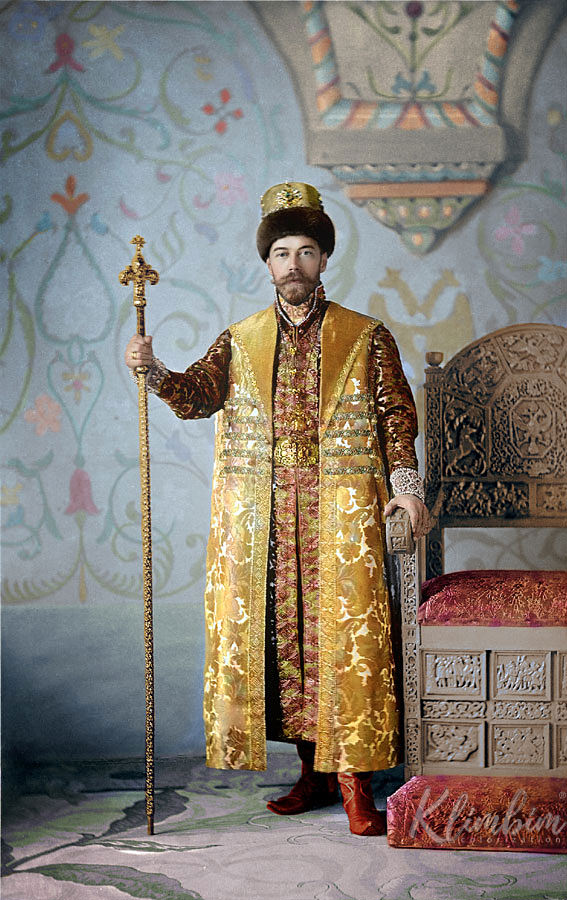
Gold brocade glows against a softly painted palace interior, where a bearded court figure stands in full ceremonial dress, gripping an ornate staff as if posing between performance and power. The colorization brings out the lacquered reds and warm metallic tones that a monochrome print can only hint at, while patterned walls and carved furnishings frame the sitter like a stage set. Every detail—fur-trimmed headwear, embroidered panels, and the heavy fall of fabric—signals the deliberate revival of old Russian styles that made the Romanovs’ 1903 ball so visually unforgettable.
St. Petersburg’s famed costume ball was designed to evoke an earlier era, and images like this turn that ambition into something tangible: textiles, icon-like ornament, and the confident posture of a man dressed for ritual and display. Rather than reading as a candid moment, the portrait feels composed and formal, the kind of studio-like presentation that served the court’s need to project continuity and grandeur. Color adds another layer, restoring the sense of spectacle that surrounded the event and helping modern viewers understand why contemporaries talked about it for years.
Within the wider story of the Romanov dynasty, the “final ball” label carries an unavoidable poignancy, but the photograph itself insists on the present tense—opulence, control, and carefully curated tradition. For readers searching for Romanov colorized photos, 1903 ball costumes, or imperial Russia portraits, this post offers a vivid window into how the court wanted to be seen at the height of its pageantry. Look closely and the scene becomes a study in imperial image-making: not just clothing, but a message woven in gold thread.