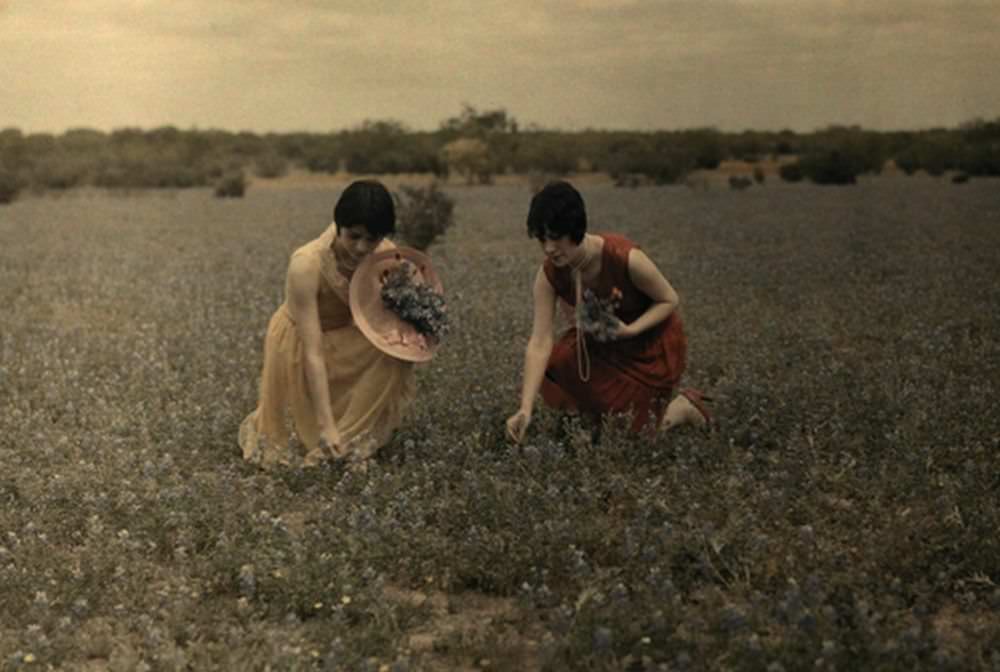
Under a wide South Texas sky, two women kneel low in a Laredo field, their attention fixed on the small blossoms scattered through the grass. One wears a pale yellow dress and holds a broad hat already dotted with fresh-picked flowers; the other, in a deep red dress, reaches forward with a careful, practiced hand. The colorization gives the scene a gentle warmth, turning a simple pastime into a vivid moment of everyday history.
Wildflowers like Texas’s state flower have long been more than decoration in this region—they signal seasons, invite outings, and anchor local memory in the landscape itself. The low horizon line and distant brush frame the women against an open expanse, emphasizing how much of life here unfolded outdoors, paced by weather and bloom. Even without a specific date or named individuals, the clothing and composed posture suggest a leisure ritual that feels both intimate and distinctly of its era.
Seen today, the photograph reads as a quiet story about companionship and place: two figures sharing the work of gathering a small, fragile symbol from a hardy field. For readers drawn to Laredo history, Texas wildflowers, or restored and colorized archival images, it offers a textured glimpse into how people once met the land—close enough to touch it, unhurried enough to notice what was growing at their feet. The result is a timeless portrait of springtime in South Texas, held together by color, light, and the simple act of picking blooms.