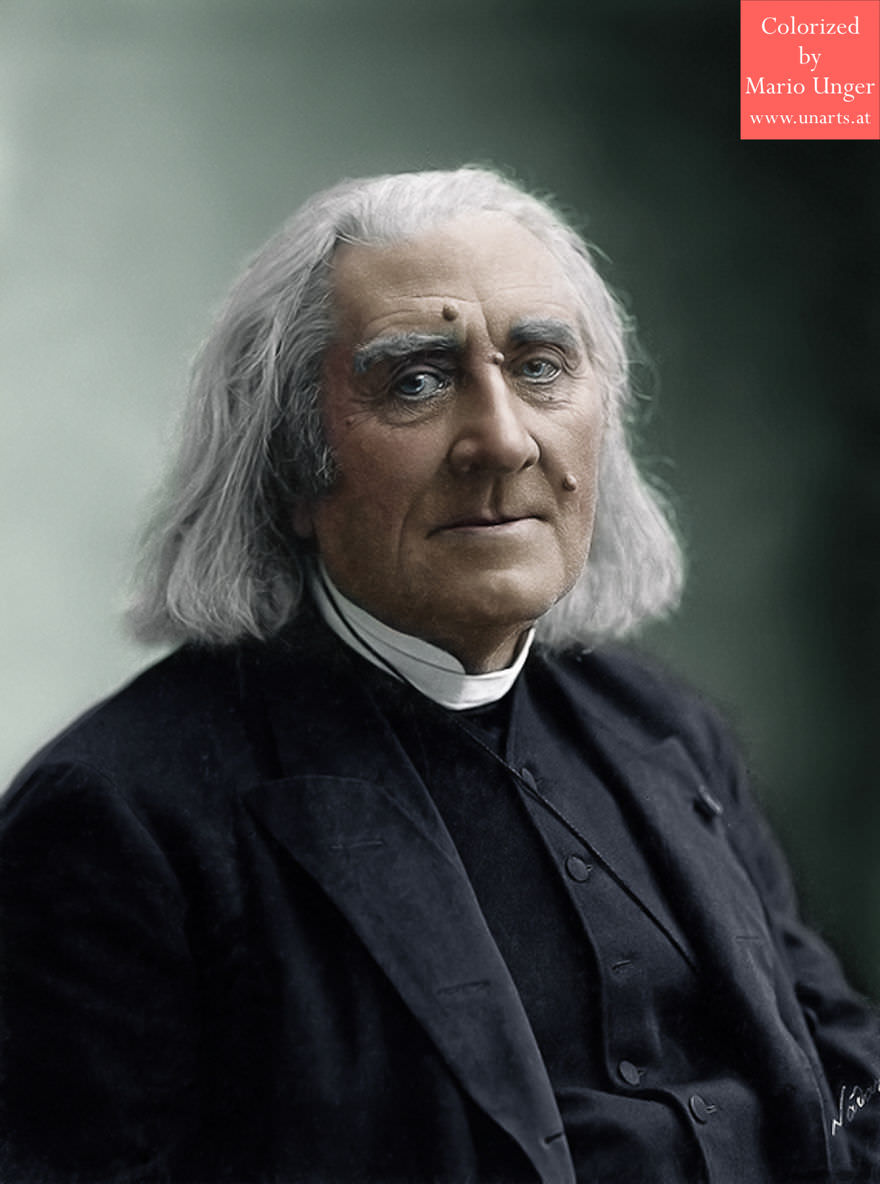
Franz Liszt appears here in an 1886 portrait that brings the late-Romantic composer into sharp, intimate focus. His long, silver hair frames a face marked by age and experience, while the dark, formal clothing and high collar lend the image a quiet gravity. A soft, subdued background keeps attention on his steady gaze and the subtle lines that suggest decades spent at the center of Europe’s musical life.
What makes this version especially striking is the colorization, which adds warmth to skin tones and depth to the fabric’s shadows without overpowering the original studio mood. Instead of a distant, sepia-tinged legend, Liszt reads as a living presence—thoughtful, composed, and unmistakably human. The gentle gradations of light across his features help modern viewers appreciate portrait photography as more than documentation: it becomes interpretation.
For readers searching for Franz Liszt photos, 19th-century composer portraits, or historical colorized images, this post offers both atmosphere and a sense of immediacy. The year in the title places the portrait at the end of Liszt’s long career, inviting reflection on legacy, memory, and how we choose to revisit the past. Colorization can’t change history, but it can change how closely we feel it—one face, one moment, newly restored to view.