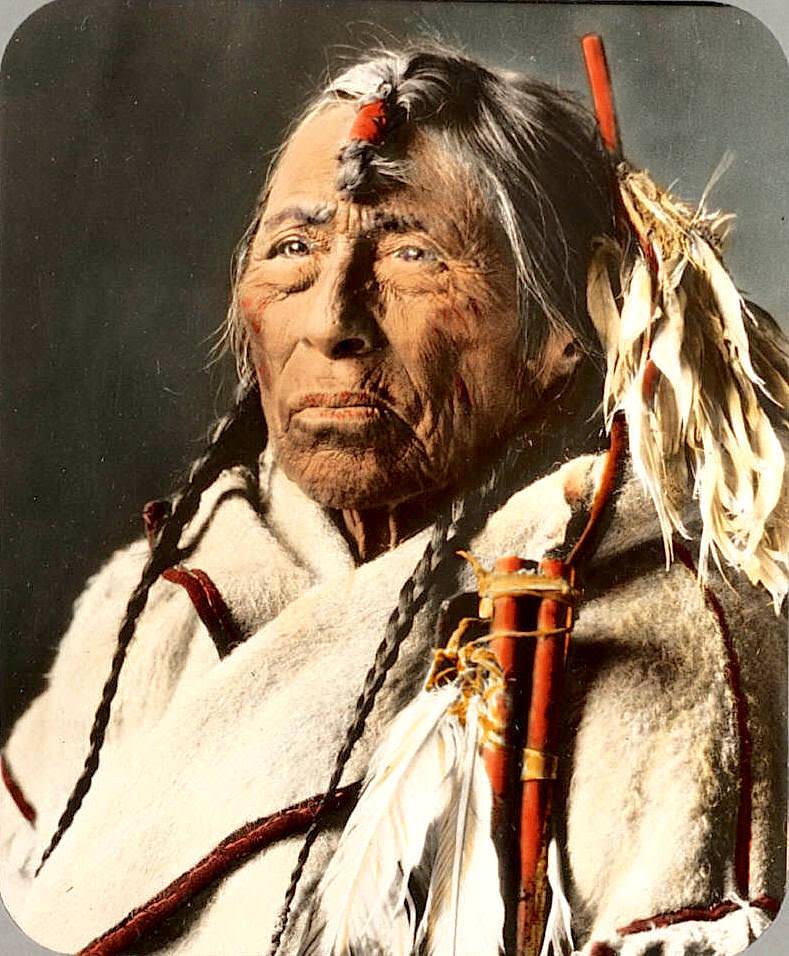
Eagle Arrow meets the viewer with a steady, unsentimental gaze, rendered with the quiet intensity that glass lantern slides can preserve. The colorization brings forward the warmth of skin tones, the silvery strands of hair, and the soft heft of a wool blanket wrapped close against the body. Set against a dark, simple backdrop, the portrait keeps its focus where it belongs—on presence, age, and the lived experience written in every line of the face.
Details in the clothing and adornment invite a longer look: braided hair, a small red accent near the forehead, and an upright staff or ceremonial item marked by vivid red paint and tied with feathers. Those textures—feather barbs, cloth fibers, and weathered wood—translate especially well in a restored, early-1900s photograph, offering a sense of material culture without turning it into a prop. Even in a posed studio-like setting, the image feels intimate, as if the sitter’s dignity resists being reduced to “type” or costume.
Created in Montana in the early 1900s and credited to photographer Walter McClintock, this lantern slide sits within a complicated era of documentation, collecting, and representation of Siksika people. The post title preserves the name Eagle Arrow, anchoring the portrait as a record of an individual rather than an anonymous subject. For readers searching historical Native American photography, Siksika history, or McClintock glass lantern slides, this colorized image offers both visual immediacy and an invitation to reflect on the stories that portraits reveal—and the ones they leave untold.