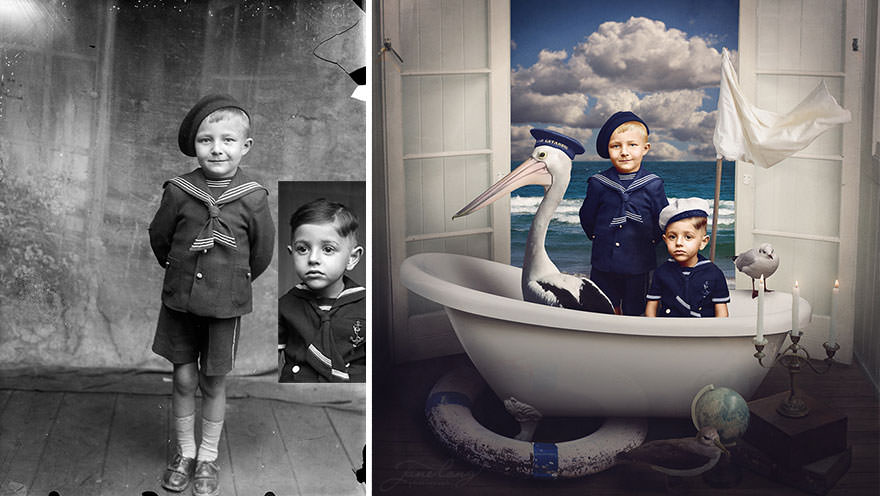
Between the cracks and stains of an old glass-plate portrait, two children in sailor-style outfits hold their poses with the practiced stillness of early studio photography. On the left, the original monochrome print keeps the setting spare: a worn backdrop, bare floorboards, and the slightly stiff formality that came with long exposures and careful staging. Those small details—creased fabric, polished shoes, the boys’ direct, searching gazes—anchor the scene in the everyday reality of the era that produced it.
Across the split, the recolored reinterpretation pushes beyond restoration into conceptual storytelling, placing the same figures into a dreamlike maritime interior. A claw-foot bathtub becomes a surreal vessel, a pelican stands like a silent companion, and a window opens onto rolling sea and towering clouds, turning a studio relic into a seaside fable. The artist’s palette and props don’t merely “add color”; they recast the photograph as a visual poem about childhood, imagination, and the pull of the ocean.
Recoloring historic glass-plate photos is often discussed as a bridge to the past, yet this work suggests another purpose: to make archival images feel emotionally immediate while acknowledging their artifice. The original portrait’s documentary weight remains visible, but the modern colorization invites viewers to linger, interpret, and revisit what a family photograph can mean. For readers interested in photo restoration, creative colorization, and the evolving afterlife of antique photography, this post offers a striking example of history meeting artistic invention.