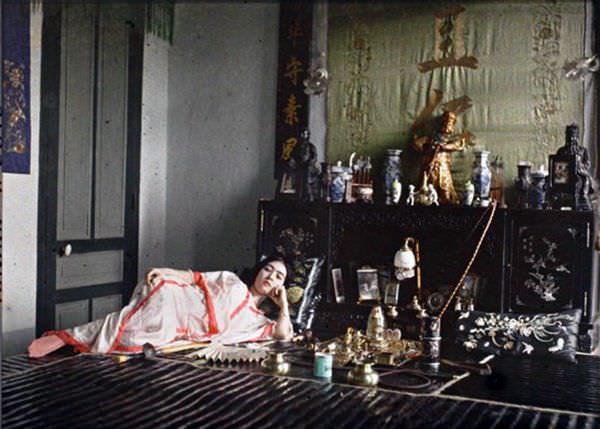
Soft color washes over a quiet interior, where a woman reclines on a low platform beside an arrangement of polished metal and lacquered objects. Behind her, an ornate household altar anchors the room—crowded with vases, vessels, and a central figure—suggesting the everyday presence of ritual and remembrance in a Vietnamese home of the 1900s. The striped matting underfoot and the carefully ordered furnishings hint at a space meant both for rest and for receiving the sacred.
Details reward a slower look: patterned cabinets, hanging calligraphy panels, and the glow of brass tones set against darker wood. The composition feels intimate, almost staged like a formal portrait, yet it also reads as lived-in—an invitation to notice how textiles, décor, and devotional items shared the same domestic stage. As a colorization, the scene leans into warmth and texture, helping modern viewers imagine materials that a monochrome print can flatten.
For anyone searching “Vietnam 1900s photo” or “early 20th century Vietnam colorized,” this image offers more than atmosphere; it opens a window onto private life, not just street scenes and monuments. The posture, the furnishings, and the altar together suggest a world where home, ceremony, and display blended seamlessly. Seen today, the photograph becomes a small story about interiors, aesthetics, and the quiet rhythms that history often leaves unrecorded.