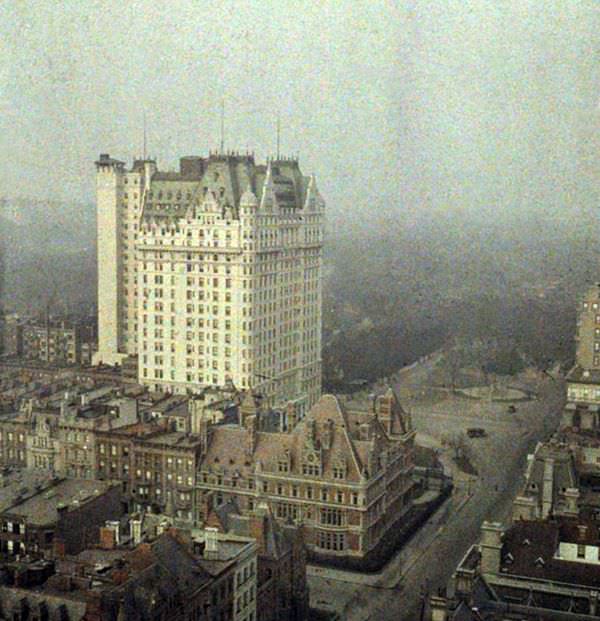
Rising above a dense patchwork of rooftops, a grand hotel-like skyscraper dominates the skyline in this colorized view from the USA in the 1900s. Its pale façade and ornate, castle-inspired roofline reflect the era’s love of monumental architecture, when new steel-frame construction allowed buildings to climb higher while still borrowing the decorative language of older European styles. The soft, slightly muted tones of the colorization lend a lived-in realism to a scene that might otherwise feel distant and purely documentary.
Below the tower, the city reads as a busy mosaic: narrow streets, closely packed masonry blocks, and a mix of modest buildings pressed up against more elaborate civic-looking structures. Off to the side, a broad open expanse—possibly a park or plaza—breaks up the urban grid and hints at changing ideas about public space and city planning. The hazy atmosphere in the distance suggests industrial smoke or morning mist, a familiar veil in many early-20th-century American cityscapes.
Colorization here isn’t just an aesthetic choice; it helps modern viewers sense materials and scale, from the warm browns of rooftops to the cooler stone surfaces catching the light. For anyone researching American urban history, early skyscrapers, or the look and feel of city life in the 1900s, this image offers a striking reference point. It also captures a moment when ambition was being built upward, one block and one skyline at a time.