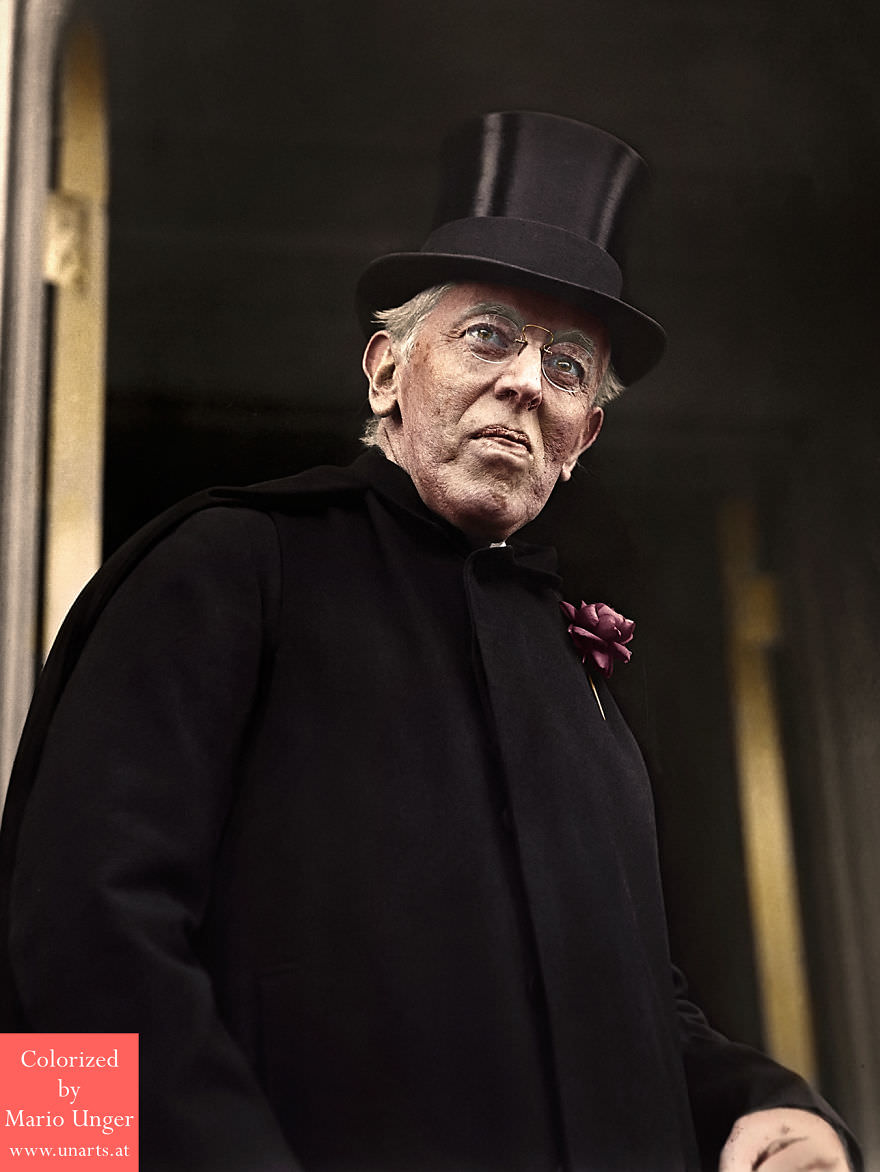
Seen from a slightly low angle, Thomas Wodrow Wilson is rendered with an almost stage-like presence—top hat set high, round spectacles catching the light, and a dark overcoat that falls in heavy folds. The colorization emphasizes texture and contrast: the pale tones of hair and skin against deep black cloth, with a single boutonnière offering a sharp point of warmth. A doorway or window frame at the edge hints at an outdoor threshold, lending the portrait a candid, in-between quality rather than a stiff studio pose.
What lingers is the expression, poised between scrutiny and reserve, as if the sitter has turned mid-thought toward someone just out of view. The formal dress signals public life and ceremony, while the close cropping keeps the focus on character—face, posture, and the quiet authority suggested by the upward perspective. Subtle shading in the background lets the figure dominate, guiding the eye from hat brim to gaze and down to the flower pinned near the lapel.
For readers searching for a colorized historical photo of Thomas Wodrow Wilson, this portrait offers a vivid way to connect with the era’s visual language—symbols of status, propriety, and public presentation. Color brings immediacy to details that black-and-white often flattens, turning fabric, skin tones, and small accessories into storytelling clues. Whether you’re exploring political history, early modern portrait photography, or the craft of photo colorization, the image invites a closer look and a slower reading of its carefully preserved details.