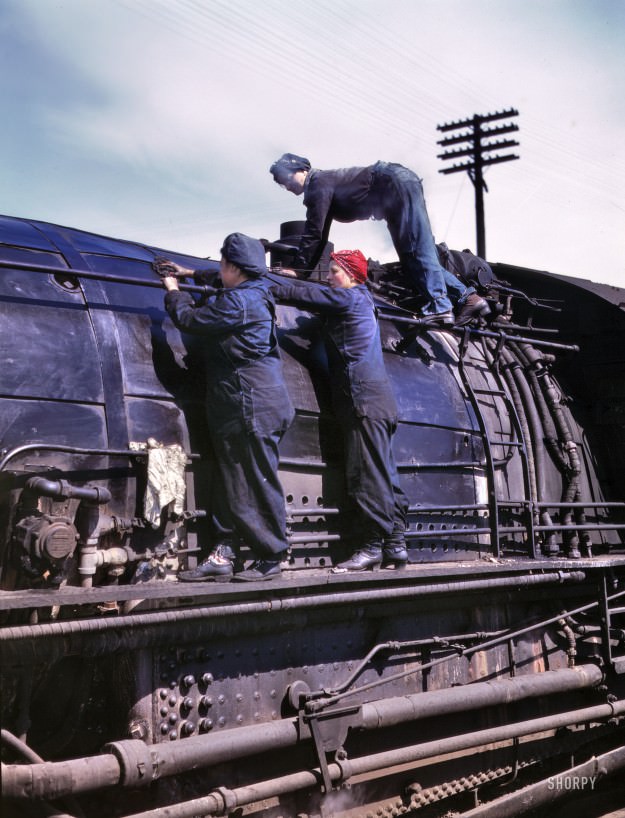
Set against the working curves of a Chicago & North Western H-class steam locomotive, three women in coveralls lean into the unglamorous but essential job of wiping down metal skin and fittings at the Clinton, Iowa roundhouse. One steadies herself on the running board, another reaches forward with a rag, and a third crouches along the top edge, turning the engine’s vast body into a workplace measured in rivets, handholds, and grime. The Kodachrome color brings out the deep blue-black sheen of the locomotive and the practical textures of denim and oil-stained cloth.
In the red bandanna is Marcella Hart, a small flash of color amid soot and steel, and a reminder that wartime railroading relied on more hands than tradition had imagined. “Women wipers” were part of the roundhouse routine that kept locomotives presentable and service-ready, cleaning surfaces that could hide leaks, cracks, or loose parts beneath layers of dirt. The scene feels both intimate and industrial: close-up labor performed on a machine built for distance and power.
Photographed by Jack Delano for the Office of War Information in April 1943, the image works as documentation and as persuasive storytelling, highlighting the home-front workforce that sustained American transportation during World War II. For readers searching railroad history, Clinton Iowa in 1943, Chicago & North Western Railroad imagery, or women working in wartime industry, this post offers a vivid glimpse into the roundhouse ecosystem. It’s a moment where maintenance becomes history—captured in color, mid-scrub, on the flank of a giant steam engine.