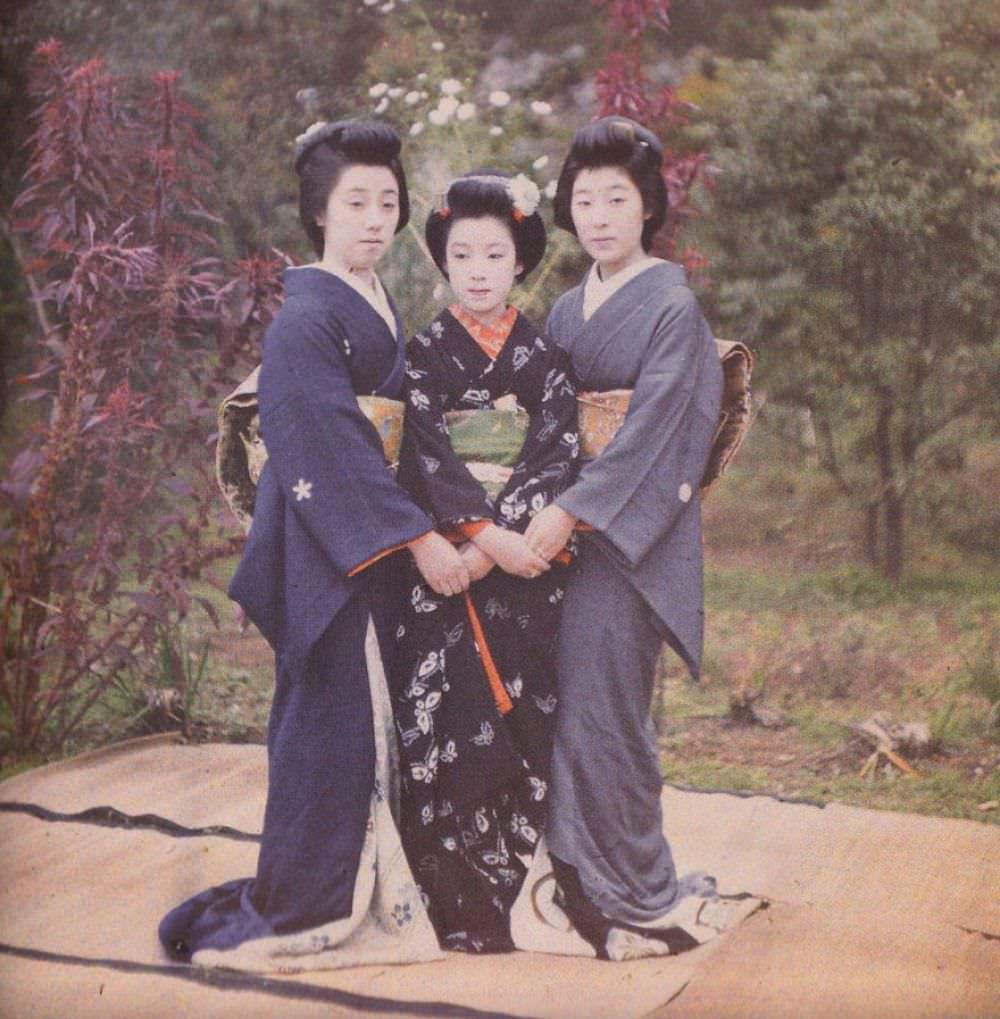
Soft color and careful posing bring three women into close focus in Kyoto in 1912, their hands lightly joined as if to anchor the moment. The kimono fabrics create a quiet harmony—deep indigo and slate tones framing a darker patterned robe at the center, with obi sashes adding restrained contrast. Their coiffed hair and composed expressions suggest a formal portrait, yet the gentle closeness reads as personal rather than purely ceremonial.
Behind them, a garden setting blurs into greens and muted blossoms, placing the scene outdoors without stealing attention from the sitters. A mat beneath their feet hints at a prepared spot for the photographer, emphasizing how portrait-making was an event in itself. The colorization heightens small details—skin tones, the warmth of cloth, and the subtle shift of light—inviting modern viewers to see the image as lived experience instead of distant history.
Kyoto at the beginning of the twentieth century sat at a crossroads of tradition and change, and portraits like this often carry that tension in what they preserve: dress, posture, and the social language of presence. Rather than offering a single narrative, the photograph opens a window onto everyday elegance—how people chose to present themselves, and how they wished to be remembered. For readers interested in early 1900s Japan, Kyoto history, or vintage Japanese kimono style, this restored image offers a vivid starting point for looking closer.