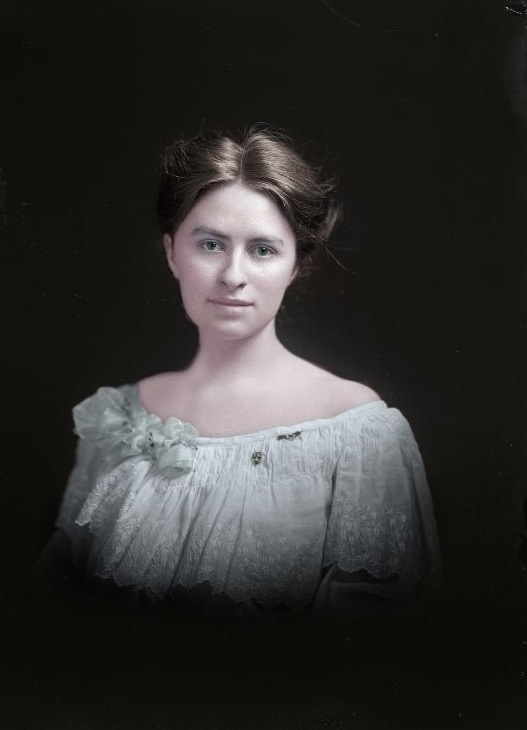
Mary Burch meets the camera with a steady, unguarded expression, framed by a dark studio backdrop that draws all attention to her face. The colorization softens the starkness of the original portrait style, bringing out the gentle tones of skin and hair while preserving the quiet formality typical of early studio photography. Even without a visible setting, the composition feels carefully arranged, suggesting the photographer’s intent to present her with dignity and poise.
A delicate, off-the-shoulder dress in pale fabric adds texture through lace and gathers, with a small floral accent near the neckline that reads as both fashionable and personal. Her hair is parted and swept back in a controlled, period-appropriate style, emphasizing a clean silhouette and the calm symmetry of the pose. Details like these offer family historians and vintage photo enthusiasts valuable clues for dating and contextualizing the portrait without relying on printed captions.
For anyone researching Mary Burch in genealogical records, this restored image provides more than a likeness—it preserves a sense of presence that black-and-white often leaves to imagination. Colorization can be controversial, but here it functions as a bridge, making the portrait feel immediate while still honoring its historical character. As part of a family archive or a broader collection of antique portraits, it invites viewers to linger on the small choices—dress, posture, and gaze—that shaped how one woman wished to be remembered.