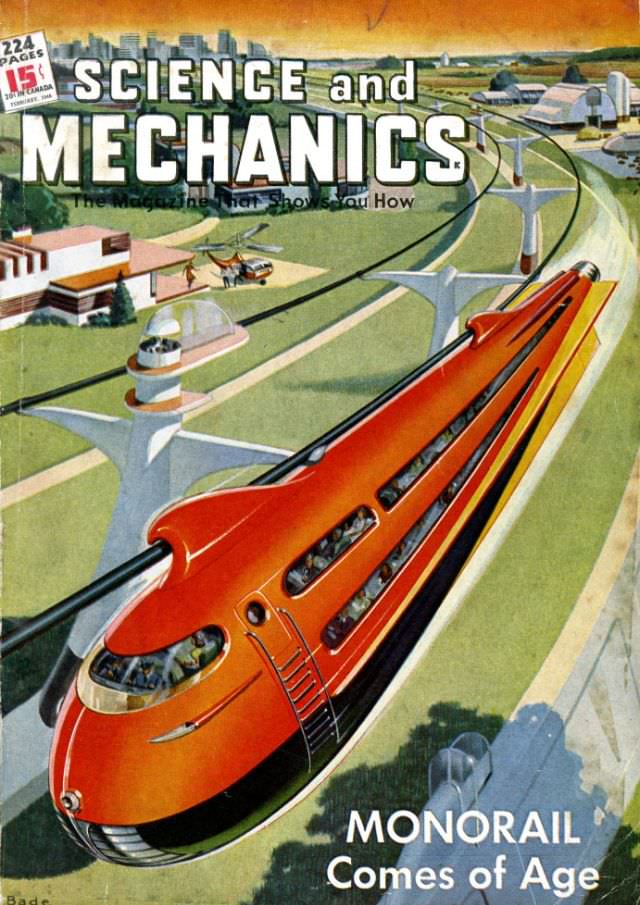
Bold, futuristic lettering crowns the February 1946 cover of Popular Mechanics, and beneath it a streamlined red monorail rockets along an elevated guideway. The artist leans into speed and modernity: wide windows reveal passengers inside, the nose is shaped like a projectile, and the track curves past a cleanly planned landscape. Even the tagline—“the magazine that shows you how”—signals an era hungry not just to admire technology, but to understand and build it.
Postwar optimism hums through every detail of the scene, from the orderly farms and tidy buildings to the distant skyline that hints at a growing, motor-and-electric age. The monorail’s confident sweep suggests a future where commuting becomes sleek and airborne, separated from street traffic and stitched into a broader network. It’s the kind of mid-century imagination that turned engineering concepts into everyday dreams, packaged for the curious reader at the newsstand.
“Monorail Comes of Age” sits at the bottom as a promise, making this cover a compact time capsule of transportation history and popular science culture. For collectors and historians, it’s also a reminder of how magazines shaped public expectations—selling tomorrow with color, motion, and a dash of certainty. Whether you’re researching vintage Popular Mechanics covers, retro-futurism, or the long history of monorail proposals, this artwork captures the confident stride of 1946’s technological horizon.