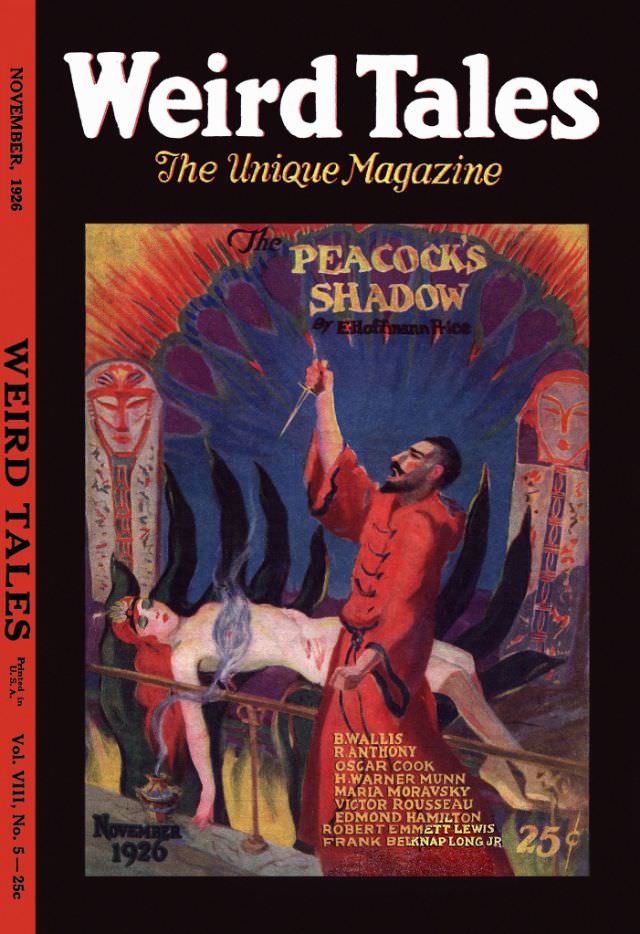
Bold, theatrical lettering announces **Weird Tales** as “The Unique Magazine,” framing a lurid pulp tableau that’s impossible to ignore. Against a deep black border marked “November, 1926,” the cover art plunges into an exoticized, stage-like scene: tall carved figures flank a central ritual space while peacock-feather shapes flare overhead in saturated blues and purples.
At the center, a robed man raises an arm as if invoking a spell or delivering judgment, while a pale, reclining figure lies stretched across a platform, smoke curling upward to heighten the sense of danger and mystery. The composition leans hard into the magazine’s signature blend of horror, fantasy, and the uncanny—high contrast, dramatic gesture, and a whiff of forbidden spectacle that would have grabbed readers on a newsstand from across the aisle.
Text woven into the illustration spotlights the featured story, “The Peacock’s Shadow,” alongside a roster of contributing authors and the 25-cent price—classic period details that make this cover a compact time capsule of 1920s pulp publishing. For collectors and fans of Weird Tales cover art, it’s a vivid example of how the magazine sold atmosphere first: mystery in the image, thrills in the promise, and a doorway into weird fiction with every issue.