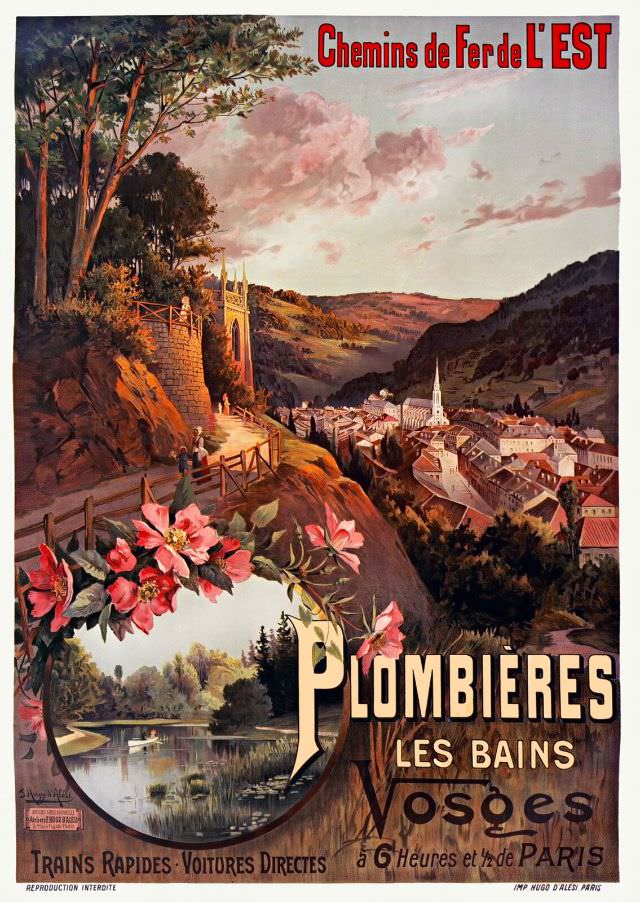
Bold lettering for “Chemins de Fer de l’Est” crowns a richly colored travel poster that invites viewers toward Plombières-les-Bains in the Vosges, presented as a destination reached by rail in the 1890s. A sweeping hillside viewpoint leads the eye along a path and stonework toward a valley town, where clustered rooftops and a prominent church spire suggest a settled, welcoming resort community. The warm sky and layered landscape give the scene the romantic glow typical of late‑19th‑century railway advertising art.
Along the lower portion, an oval vignette framed by pink blossoms offers a calmer counterpoint: water, trees, and reflections that hint at leisure and restorative nature. That floral border functions like a promise—healthful air, scenic walks, and the gentle pleasures associated with a spa town—while the composition as a whole balances grandeur and intimacy. Even without pinpointing individual buildings, the poster’s visual narrative is clear: arrive by train, then slow down and savor the setting.
In the small print, the message is unmistakably promotional, emphasizing rapid trains and direct carriages, with travel time from Paris called out to make the journey feel practical as well as picturesque. For collectors of French railway ephemera, Belle Époque graphic design, or Vosges regional history, this “Plombières les Bains” cover art stands as a vivid example of how rail companies sold destinations through atmosphere and aspiration. It’s a compelling piece for a WordPress post on vintage travel posters, French spa tourism, or the cultural history of the Chemins de Fer de l’Est network.