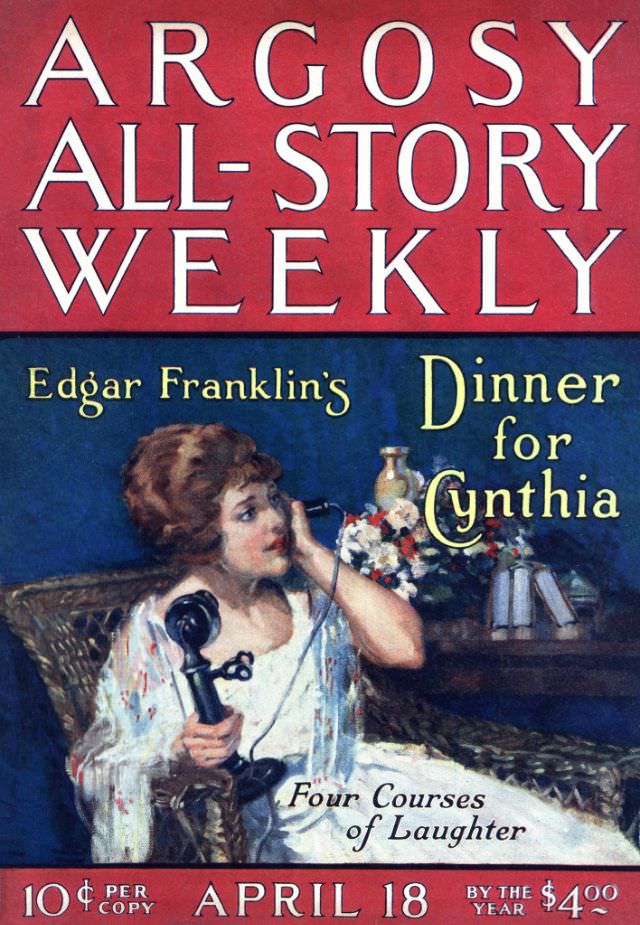
Bold typography shouts “ARGOSY ALL-STORY WEEKLY” across a rich red banner, immediately setting the tone for a lively pulp-era read. Below, a painted scene in deep blues and warm skin tones draws the eye to a young woman lounging on a wicker chair, absorbed in the novelty of a candlestick telephone. The cover layout balances advertising-like clarity with illustrative drama, a hallmark of early 20th-century magazine design.
Edgar Franklin’s “Dinner for Cynthia” is featured prominently, paired with the teasing line “Four Courses of Laughter,” promising romance and comedy with a theatrical wink. Small details—her relaxed posture, the receiver pressed to her ear, and the tabletop arrangement behind her—suggest a domestic interior where modern communication becomes a plot device. Even without a full story in view, the artwork sells an atmosphere: flirtation, suspense, and the everyday glamour of a call that might change the evening.
Dated April 18, 1925, this Argosy cover is also a snapshot of print culture at a moment when mass-market fiction and illustrated covers competed for attention on crowded newsstands. The price line at the bottom and the confident serif lettering emphasize accessibility and scale, reminding today’s viewer how widely these weekly story magazines circulated. For collectors and historians alike, it’s a vivid example of 1920s cover art—part advertisement, part narrative, and entirely designed to make you turn the page.