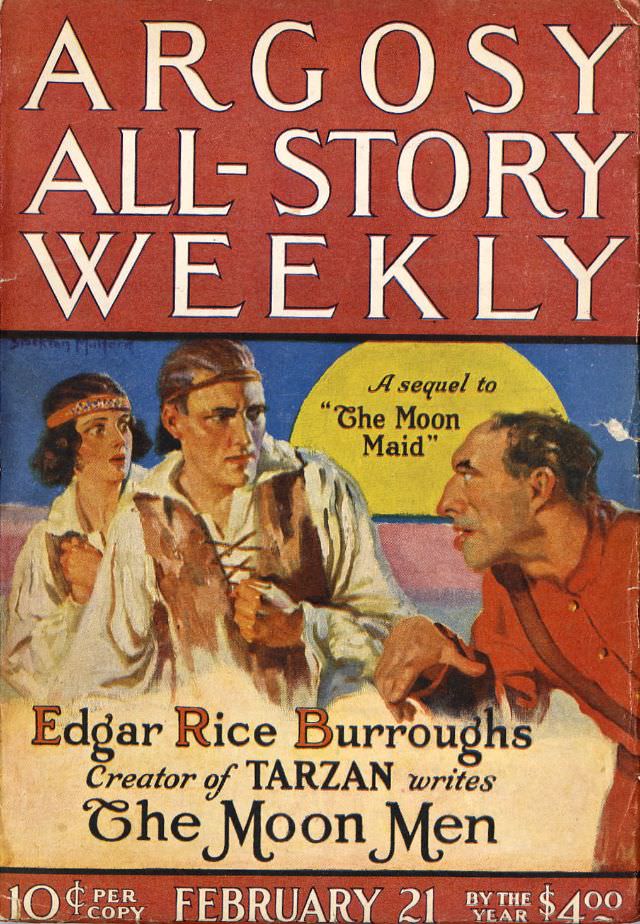
Bold lettering at the top announces “Argosy All-Story Weekly,” setting the tone for a classic pulp magazine cover that was meant to grab a reader from across the newsstand. The palette is warm and dramatic—brick reds, sandy yellows, and deep blues—framing an illustration where tension is already in motion. Even before a single line of fiction is read, the typography and color work sell urgency, adventure, and high-stakes melodrama in the instantly recognizable style of 1920s popular print culture.
At center, three figures dominate the scene: a wary man in a laced shirt and vest, a woman in a headband and white wrap looking on with concern, and a third man in a red garment leaning in with a pointed, confrontational gesture. Their faces and body language suggest a charged exchange—an accusation, a bargain, or a warning—rendered with the theatrical expressions pulp readers expected. Behind them, a circular caption teases “A sequel to ‘The Moon Maid,’” using a simple graphic device to spotlight continuity and lure returning fans.
Prominently credited across the lower half is “Edgar Rice Burroughs, Creator of Tarzan,” paired with the featured title “The Moon Men,” a reminder of how magazines traded on star authorship and series appeal. The cover also preserves period details that collectors and historians love: the “10¢ per copy” price and the clearly printed date “February 21” along the bottom border. For anyone researching Argosy magazine, pulp cover art, or the marketing of early science fiction and adventure stories, this issue offers a vivid snapshot of how weekly fiction was packaged and sold in the Roaring Twenties.