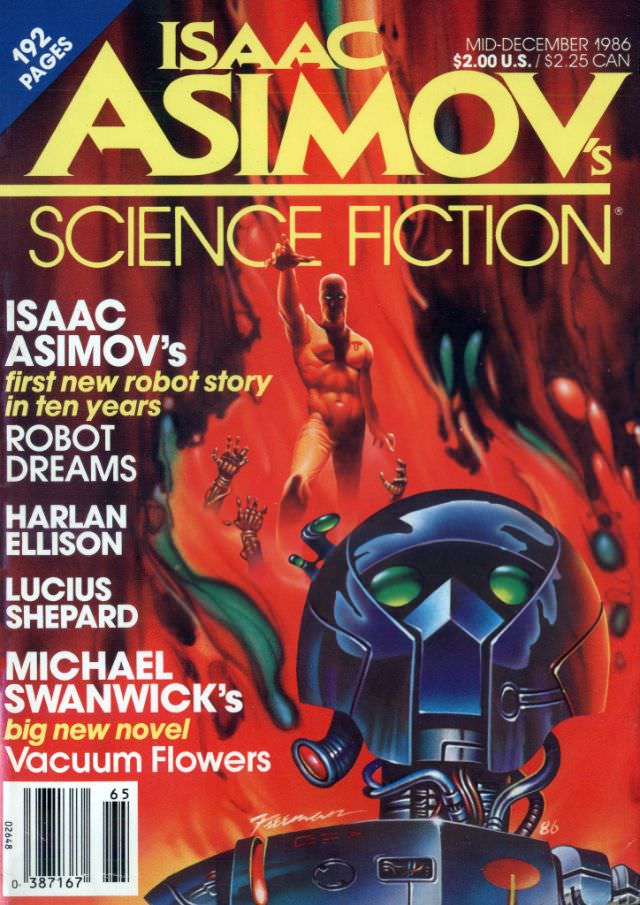
Bold, molten reds and greens surge behind the towering masthead of *Isaac Asimov’s Science Fiction*, instantly placing this mid-December 1986 cover in the high-gloss, high-concept visual language of late–Cold War pop futurism. The typography is loud and confident, with “192 pages” and the cover price called out like a promise of value, while the issue date anchors it firmly in a pre-internet era when genre magazines were discovered on spinner racks and newsstands. Even before you read a single line, the design signals intensity: technology, spectacle, and the uneasy beauty of the unknown.
At the center, a helmeted robot head dominates the foreground, rendered with reflective blues and ominous green eyes that feel both mechanical and strangely expressive. Behind it, a human figure raises an arm in a dramatic, almost ceremonial pose, while smaller reaching hands emerge from the swirling background, adding tension and a hint of peril. The overall composition leans into classic science-fiction themes—identity, control, and the boundary between flesh and machine—translated into an arresting piece of cover art meant to stop a reader mid-aisle.
Readers in 1986 would have recognized this magazine as a key gateway into contemporary speculative fiction, and the cover lines do their job as historical signposts. The issue prominently teases “Isaac Asimov’s first new robot story in ten years” under the title “Robot Dreams,” alongside names like Harlan Ellison, Lucius Shepard, and Michael Swanwick, whose “Vacuum Flowers” is billed as a major new novel. For collectors and fans of science fiction magazine history, this cover isn’t just packaging—it’s a snapshot of what the genre wanted to be at the time: daring, literary, and vividly futuristic.