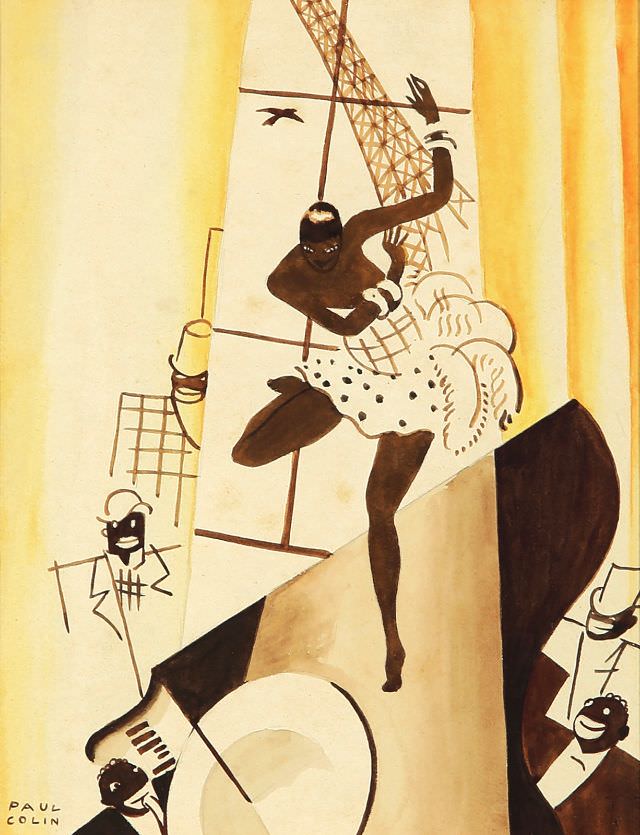
A whirl of motion dominates this circa-1930 maquette for “Josephine & Jazz,” where a spotlighted dancer kicks forward in mid-step, her ruffled skirt dotted like confetti against a warm wash of cream and honey tones. The composition leans into theatrical exaggeration—long limbs, sharp angles, and a dramatic diagonal that makes the whole scene feel like it’s surging off the page. Behind her, a stylized city silhouette and a tower-like structure hint at modernity and nightlife without pinning the moment to a single street or venue.
On the edges of the stage, small band figures appear like quick ink notes, their grinning faces and simplified instruments suggesting the pulse of jazz rather than documenting a specific ensemble. The artwork’s economy of line—loose sketches for the background, bolder shapes for the performer—reads like a working design meant to sell an atmosphere: rhythm, glamour, and the daring energy audiences associated with popular entertainment in the early 20th century. Even the negative space plays a role, giving the dancer room to “sound” louder, as if the music is implied in the gaps.
As cover art, this piece functions as both advertisement and cultural snapshot, tying the name “Josephine” to the era’s fascination with dance, stage persona, and the modern city’s after-dark allure. Collectors and design historians will recognize the hallmarks of Art Deco–era illustration: confident geometry, strong contrast, and a sense of speed. Whether you’re here for jazz history, vintage poster design, or the aesthetics of 1930s performance culture, the maquette offers a vivid entry point into the period’s visual language.