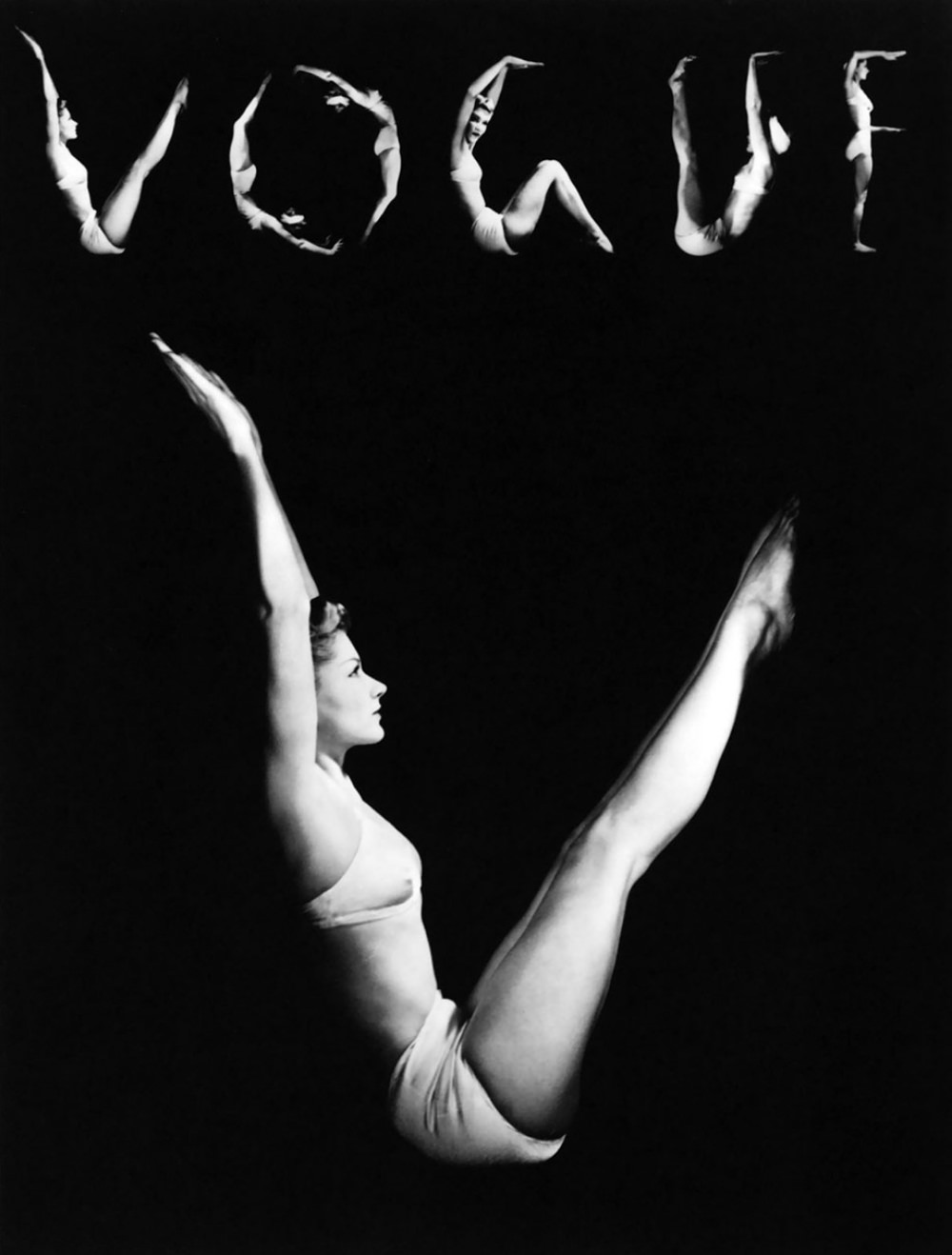
Across a dark, studio-like backdrop, a dancer’s body is repeated in crisp silhouettes that arc into letters, spelling “VOGUE” with nothing but motion and light. The stark contrast and clean lines turn athletic pose into graphic design, a reminder that fashion imagery has long borrowed from performance to communicate energy, modernity, and poise. Even without color or elaborate styling, the composition feels unmistakably like cover art—bold, minimal, and built to stop a viewer mid-scroll.
Fashion magazine covers evolve by reinventing the same visual problem: how to make a single frame feel like an event. Here, typography becomes choreography, and the figure’s lifted arms and extended legs do the work of an illustrator’s pen, suggesting a bridge between early cover illustration traditions and the later dominance of photographic experimentation. The result is both playful and precise, echoing the way iconic Vogue covers often balance elegance with a wink of creative risk.
For readers tracing the evolution of Vogue cover design, this image offers a compact lesson in editorial storytelling: concept first, then craft. It invites a closer look at how negative space, repetition, and pose can carry brand identity just as powerfully as logos, headlines, or couture. As part of a broader timeline of Vogue covers and cover art history, it highlights why the magazine’s visual language endures—because it continually finds new ways to make style feel alive.