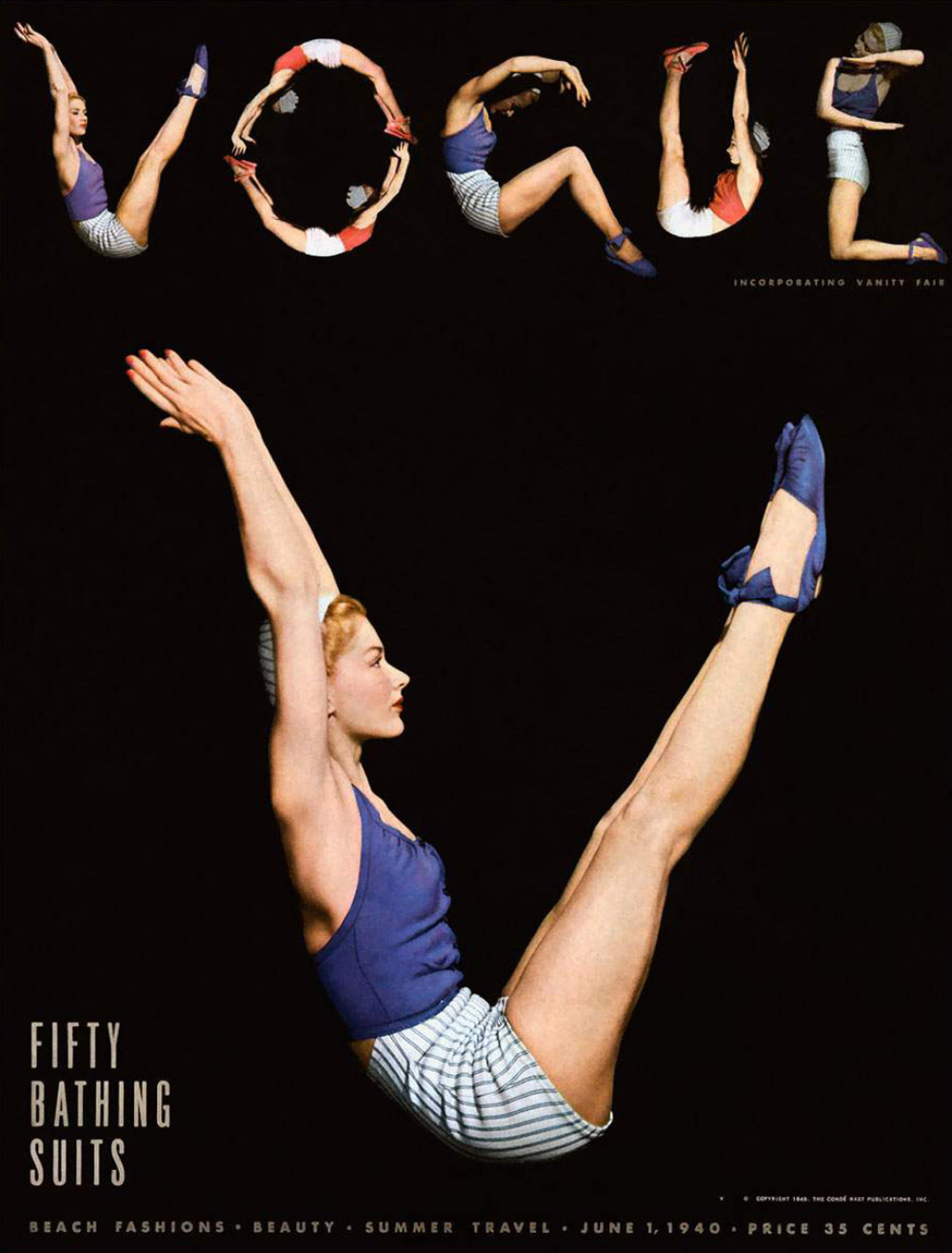
Across a deep black field, the word “VOGUE” is spelled not with type but with motion—five small acrobatic poses forming each letter like a playful rebus, while a larger figure below lifts into a crisp V-sit. The model’s cobalt swimsuit, striped shorts, and matching shoes pop against the void, turning the body into both subject and graphic design. Even at a glance, the cover reads as modernist fashion theater: clean negative space, bold color, and a sense that elegance can be athletic.
Dated June 1, 1940, this Vogue US cover reflects a magazine pushing beyond portraiture into concept and choreography, where the studio becomes a stage and typography becomes performance. Credited to photographer Horst P. Horst with model Lisa Fonssagrives and editor Audrey Withers, the image carries the polish associated with high fashion while celebrating strength, balance, and summer ease. Text along the bottom—“Fifty Bathing Suits,” “Beach Fashions,” “Beauty,” and “Summer Travel”—anchors the artistry in the practical temptations of seasonal style.
Seen today, the cover feels like a milestone in fashion photography and magazine design, merging surreal simplicity with body-driven lettering that still looks strikingly contemporary. The careful lighting and saturated blues suggest controlled studio craft, while the repeated mini-figures across the top introduce rhythm, wit, and a subtle nod to dance. For collectors and historians of Vogue covers, Horst P. Horst’s work here remains a vivid example of how editorial imagery can sell swimwear and, at the same time, invent a visual language all its own.