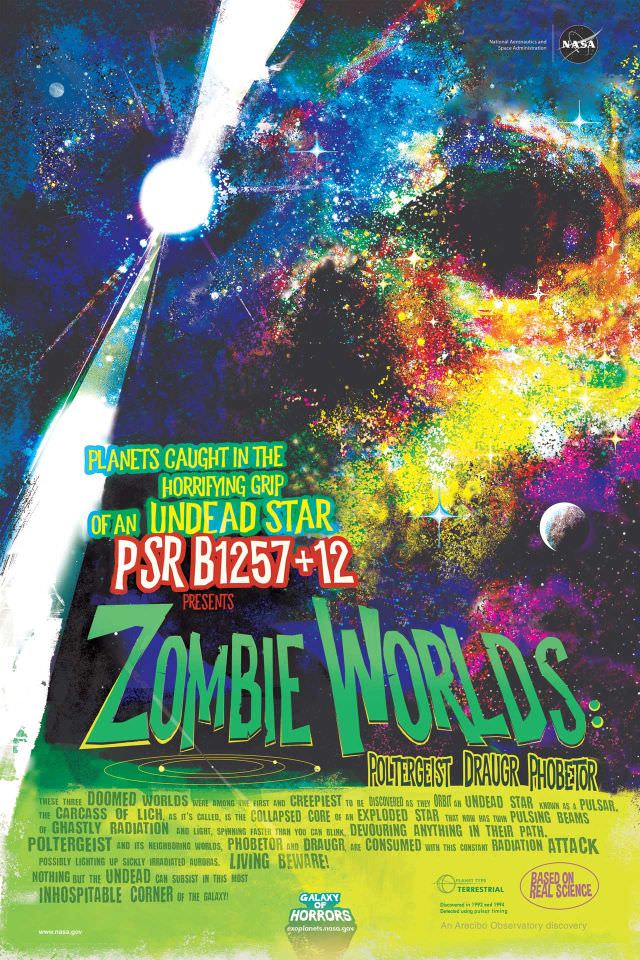
Neon greens and radioactive yellows bleed into a star-splashed void, where a glaring beam slices the composition like a warning siren in space. The design leans into pulp science-fiction spectacle, turning a cosmic scene into a lurid stage for dread, with distant worlds floating like helpless witnesses near a chaotic, color-burst nebula. NASA branding in the corner adds a jolt of authenticity to the fantasy, hinting that the terror being sold here is rooted in real astronomy.
“Zombie Worlds” reads like a drive-in marquee, and the copy doubles down with the chilling idea of planets trapped by an “undead star,” identified as PSR B1257+12. The poster treats the pulsar as a kind of celestial monster—collapsed, explosive, and still lashing out—while the typography and exaggerated taglines evoke mid-century cover art that promised both thrills and pseudo-scientific plausibility. It’s a playful collision of horror language and astrophysics, where the cosmos becomes a haunted house with orbital mechanics.
For WordPress readers hunting for retro space art, NASA poster history, or the strange meeting point of science communication and genre storytelling, this cover delivers instant atmosphere. Every element—color, beam, scattered planets, and sensational text—works to make deep space feel close, dangerous, and strangely alive. Whether you arrive for the aesthetics or the concept, “Zombie Worlds” offers a memorable snapshot of how real discoveries can be reframed as cosmic horror without needing a single named hero or pinpointed setting.