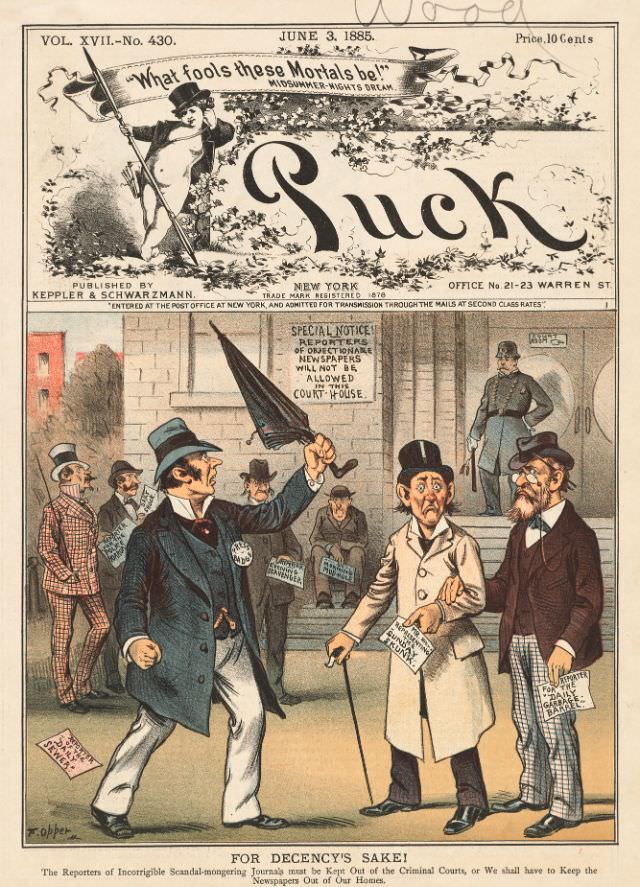
Bold lettering spells out “Puck” beneath a ribbon that asks, “What fools these mortals be!”—a fitting motto for the magazine’s sharp-edged humor. The June 3, 1885 cover (Vol. XVII, No. 430) presents itself as a polished piece of 19th-century print culture, complete with the price line and publication details that place it firmly in the world of Gilded Age mass media and illustrated satire.
In the main cartoon, well-dressed men in hats and patterned suits crowd the steps of a courthouse, where a posted notice reads that “special notice” will bar reporters or “newspapers” from entry. A brash figure raises an umbrella as if ready to argue his way inside, while another character in a pale coat looks rattled and out of place; nearby, a uniformed officer stands watch from the landing. The scattered papers and placards, along with a visible “Press” badge, turn the scene into a lively commentary on who gets access, who controls the story, and how public life becomes spectacle.
“For decency’s sake!” declares the caption, framing the cover’s central tension: calls to protect morality versus the public’s appetite for scandal and the press’s determination to report it. As cover art, it’s also a strong example of Puck magazine’s use of color lithography and theatrical staging to make complex civic debates instantly legible to readers. For anyone researching newspaper history, media censorship, or political cartoons of the 1880s, this Puck cover offers a vivid window into the era’s anxieties about courts, corruption, and the power of headlines.