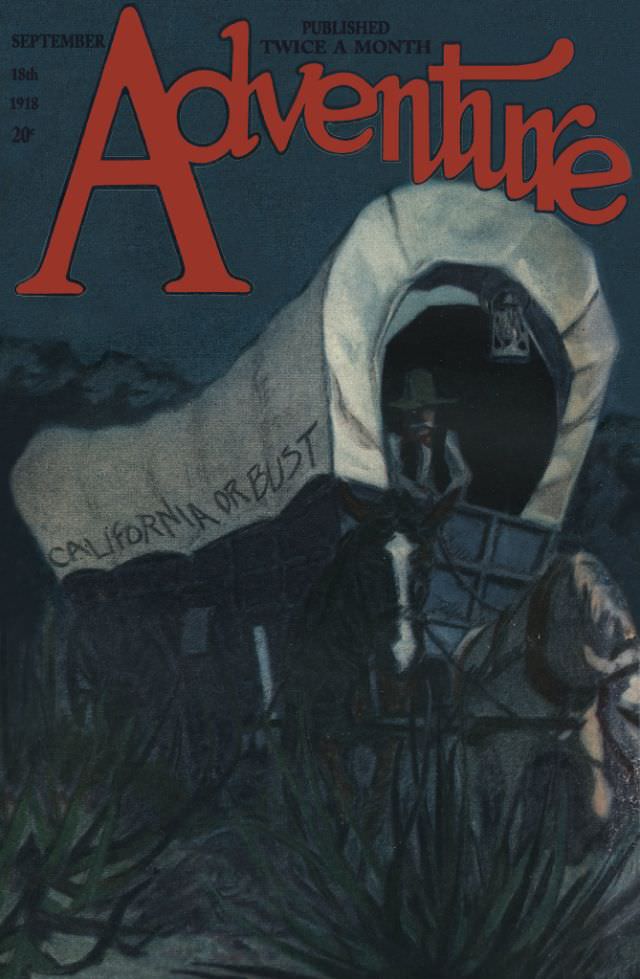
Bold red lettering spells “Adventure” across a moody, dusk-toned scene, immediately setting the pulse of a pulp magazine cover from September 18, 1918. A covered wagon looms out of the darkness, its pale canvas top catching what little light remains, while the note “CALIFORNIA OR BUST” scrawled on the side promises a long haul and a bigger gamble. The cover’s deep blues and shadowy brushwork lean into suspense, inviting the reader to imagine what waits beyond the next ridge.
At the mouth of the wagon, a lone figure sits half-hidden inside the black oval of the opening, a hat brim and posture hinting at fatigue, vigilance, or both. The road itself is barely there—more suggested than drawn—so the grass and night sky take over, turning the landscape into a stage for uncertainty. Even without a clear villain in sight, the composition makes the wagon feel exposed, as if danger could step out of the dark at any moment.
Printed details like “Published Twice a Month” and the small “September 18th 1918” text anchor the artwork in its original magazine context, when cover art had to sell drama in a single glance. For collectors and history-minded readers, this piece is a vivid example of early 20th-century adventure magazine illustration: frontier travel, high stakes, and the mythic pull of the West distilled into one striking image. It’s an evocative artifact for anyone exploring pulp cover art, vintage magazines, and the visual storytelling of the 1910s.