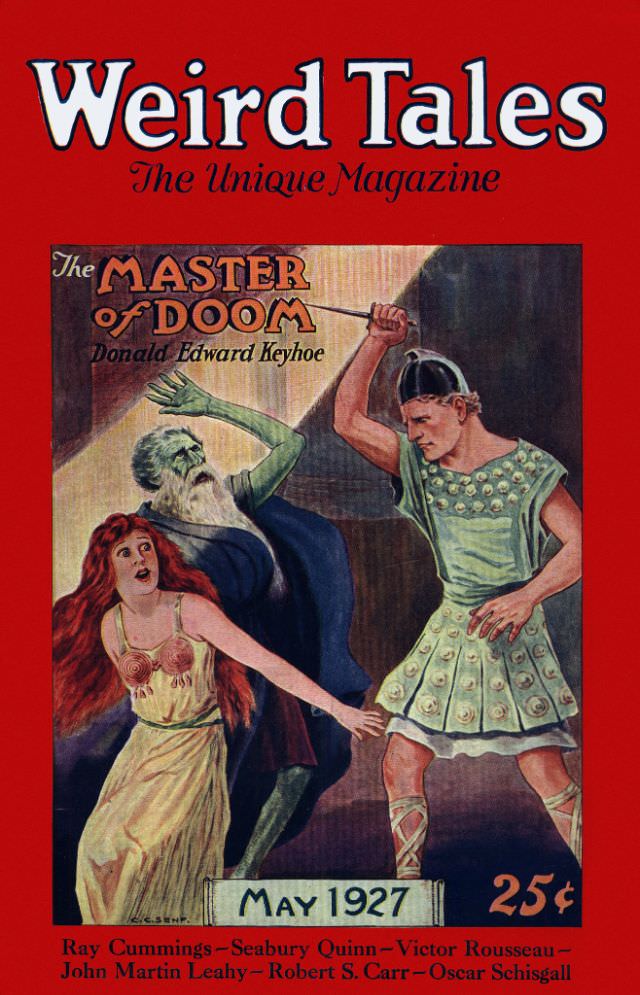
Bold red lettering shouts “Weird Tales” across the top of this May 1927 cover, a perfect advertisement for pulp-era thrills and the magazine’s promise of “The Unique Magazine.” Below the masthead, the painted scene drops straight into melodrama: a terrified woman recoils, a cloaked, green-skinned figure looms behind her, and a young warrior in a studded tunic raises a weapon as if caught mid-rescue. Even before a reader turns a page, the composition sells danger, motion, and the heightened emotions that defined fantasy and horror illustration in the 1920s.
The central story title, “The Master of Doom,” is printed prominently with the author credit to Donald Edward Keyhoe, anchoring the artwork to the issue’s featured adventure. The artist uses theatrical lighting and saturated color to separate heroes from menace—warm flesh tones and flowing hair in the foreground, shadowed drapery and an uncanny face in the back—making the threat feel immediate and intimate. It’s a small stage packed with big stakes, the sort of cliffhanger moment that made newsstand browsing irresistible.
At the bottom, the date strip “May 1927” and the 25¢ price tag place the object firmly in its original commercial world, while a line of contributor names hints at the variety of strange fiction waiting inside. For collectors and researchers, this cover is a vivid snapshot of early Weird Tales cover art, where sensational imagery, clear typography, and story branding worked together to define pulp magazine marketing. As a WordPress post feature, it serves equally well as a piece of graphic history and a doorway into the era’s imagination.