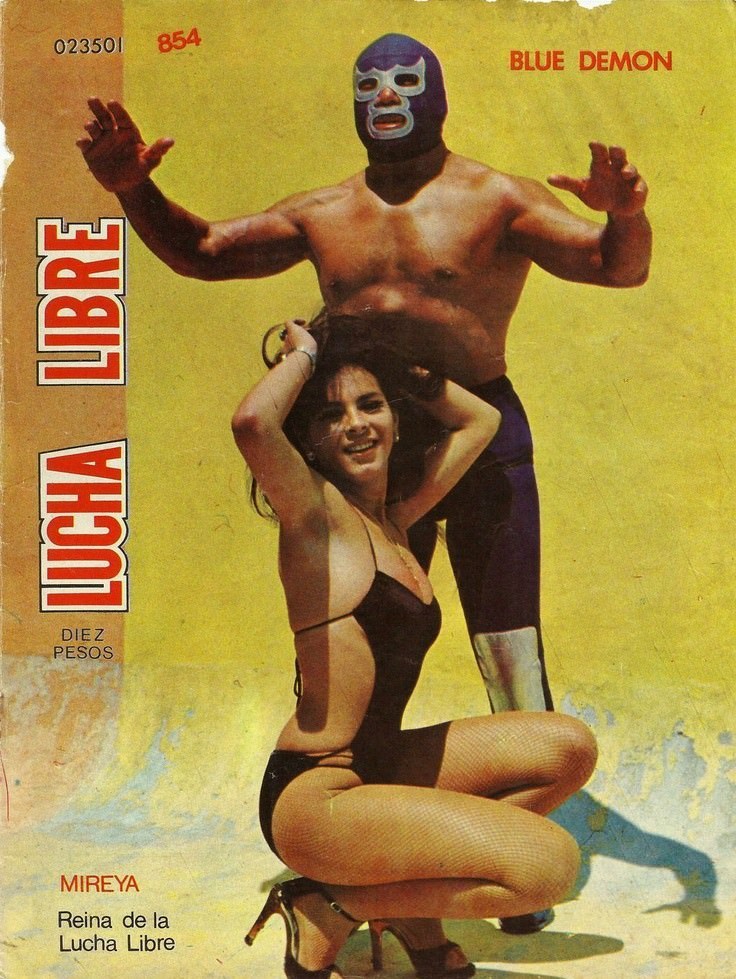
Lucha Libre erupts from this 1970s-era cover in bold blocks of color and attitude, with the masked wrestler “Blue Demon” towering against a sun-faded yellow background. The design leans into high drama: arms raised in a ready stance, the iconic mask rendered in deep blue and white, and the magazine’s vertical “LUCHA LIBRE” title screaming in red-and-white type. Even the small details—issue numbering and the “DIEZ PESOS” price—anchor the artwork in the everyday world of newsstands and popular print culture.
At the foreground, a model posed in a one-piece swimsuit and heels adds the era’s pin-up energy, credited on the cover as “MIREYA, Reina de la Lucha Libre.” The juxtaposition is classic magazine cover theater: glamour and grit sharing the same stage, selling a fantasy of spectacle that extended beyond the ring. Scuffs, discoloration, and worn edges now read like a time capsule, proof that this piece once circulated hand to hand rather than living behind glass.
Collectors and fans of lucha libre history will recognize how covers like this helped build legends—turning masked identities into pop icons through graphic design as much as athletic performance. This post’s visual tour celebrates that mix of blood, masks, and glory without needing a single in-ring photograph: the cover art itself does the storytelling. For anyone researching Mexican wrestling magazines, 1970s cover illustration, or the cultural mythology of the mask, this image is a vivid entry point into a loud, unapologetic print era.