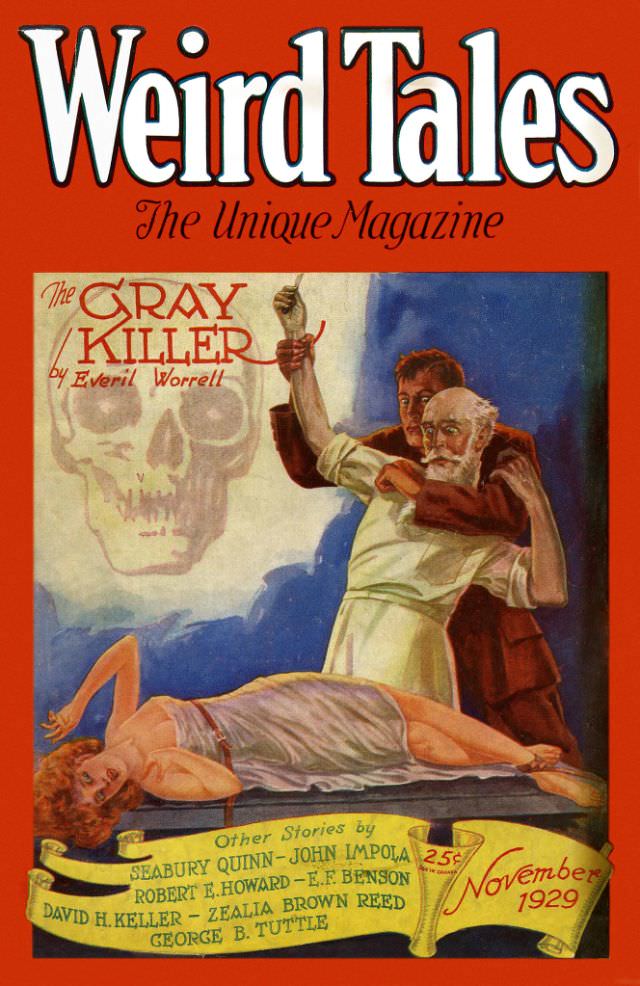
Bold scarlet lettering announces *Weird Tales* across the top, staking out its promise as “The Unique Magazine” before the eye even drops to the drama below. The November 1929 cover leans into pulp-era spectacle with high-contrast colors and theatrical staging, the kind of newsstand magnet designed to stop casual browsers cold. Even in reproduction, the typography and saturated palette feel like a direct line into the late-1920s marketplace for horror and fantasy.
At center, the cover illustration for “The Gray Killer” by Everil Worrell unfolds like a frozen moment from a melodramatic nightmare. An older, white-bearded man is gripped from behind by a shadowy figure raising a blade, while a woman lies across a table in the foreground, her pose and pale dress heightening the sense of peril. A looming skull motif in the background reinforces the macabre mood, turning the scene into a visual shorthand for dread, captivity, and impending violence.
Collectors and literary historians often return to *Weird Tales* cover art because it encapsulates how pulp magazines sold fear, mystery, and the uncanny with a single punchy image. This issue’s composition—bannered credits, sensational central tableau, and the clearly printed “November 1929” date—offers a compact artifact of genre publishing history and vintage magazine design. For anyone exploring early 20th-century horror illustration, classic pulp covers, or the visual culture surrounding *Weird Tales*, this artwork remains a vivid entry point.