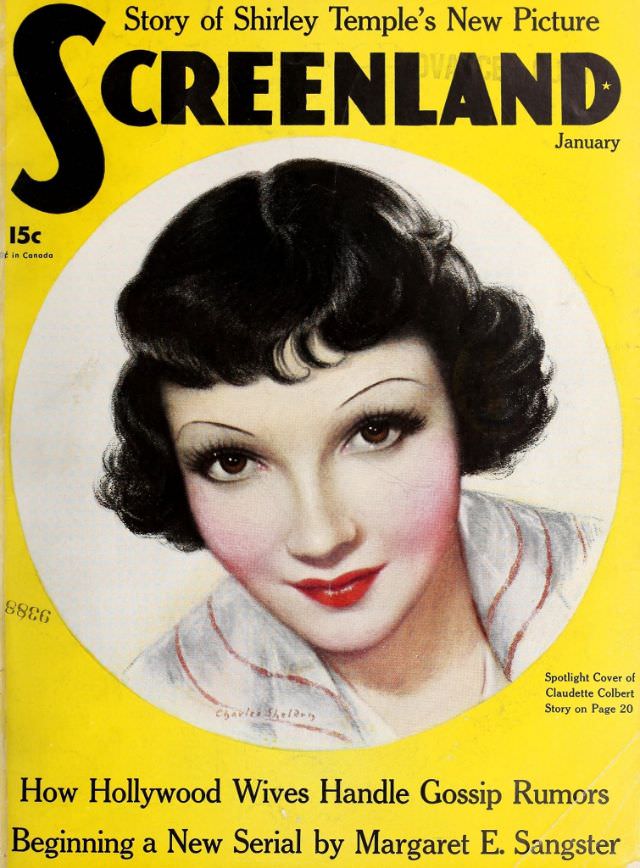
Bold yellow framing and oversized typography make the January 1936 Screenland magazine cover feel like a marquee in print, designed to catch the eye on a newsstand. Centered in a soft oval is a glamorous illustrated portrait, all careful shading and studio polish, with the kind of curled hairstyle and luminous makeup that defined mid-1930s screen style. Even the small price marking and tight cover layout hint at a mass-market publication aimed at moviegoers hungry for the latest Hollywood talk.
Across the top, the cover teases “Story of Shirley Temple’s New Picture,” a reminder of how fan magazines mixed star publicity with behind-the-scenes promise. Lower on the page, headlines about gossip and a new serial underline the era’s appetite for ongoing celebrity narratives—part entertainment, part social guide, and part escapism during a difficult decade. The design balances elegance with salesmanship: a striking face to draw readers in, then punchy lines to sell the stories inside.
As cover art, this piece is also a snapshot of printing and promotion in classic Hollywood’s fan-magazine heyday, when illustration could idealize a star more smoothly than photography. The prominent masthead, the clean color blocks, and the carefully composed portrait all work together to create instant recognition and aspiration. For collectors and researchers interested in 1930s media, Screenland covers like this offer rich material on celebrity culture, magazine design, and the visual language of cinema fandom.