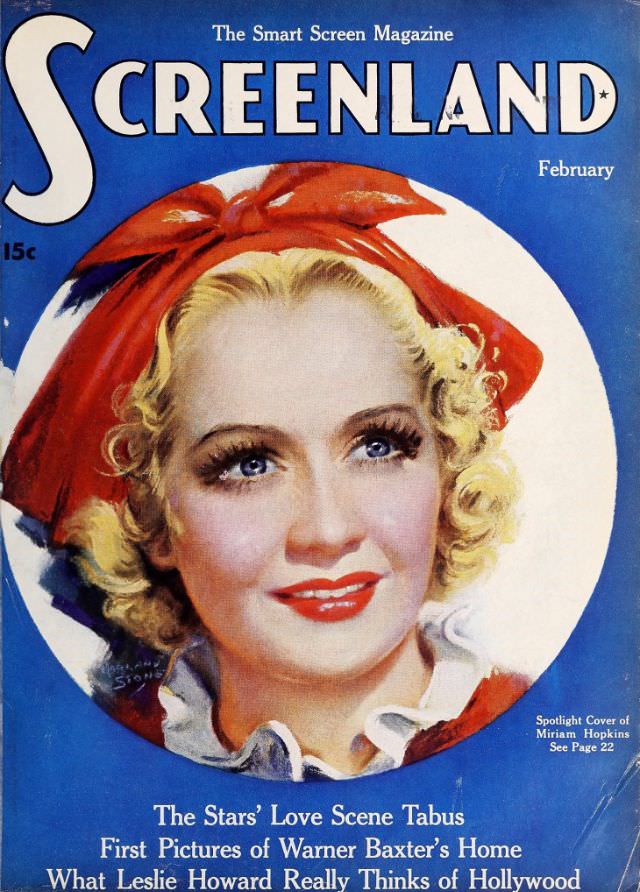
Bold blue lettering crowns the February 1936 cover of *Screenland*, billed as “The Smart Screen Magazine,” with a 15-cent price tucked along the left margin. At center, a glamorous illustrated portrait fills a white circular frame: a blonde star with glossy red lipstick and bright eyes, styled in soft curls and topped with an oversized red headscarf tied in a jaunty bow. The saturated palette—cobalt, scarlet, cream, and gold—leans into the era’s love of high-contrast color printing and irresistible newsstand appeal.
Closer reading of the cover text hints at what moviegoers were hungry for between picture shows: romance, gossip, and a peek behind studio gates. Teasers along the bottom promise “The Stars’ Love Scene Tabus,” “First Pictures of Warner Baxter’s Home,” and “What Leslie Howard Really Thinks of Hollywood,” selling both fantasy and access in equal measure. On the right, a callout spotlights “Miriam Hopkins,” directing readers to “See Page 22,” anchoring the artwork to the celebrity culture that powered fan magazines in the mid-1930s.
As cover art, this *Screenland* issue works like a time capsule of Hollywood’s Golden Age marketing—carefully composed beauty, confident typography, and story hooks designed to turn curiosity into a purchase. The illustration’s polished optimism and carefully chosen reds and blues also echo the period’s visual language, where glamour served as a bright counterpoint to everyday worries. For collectors, historians, and vintage magazine enthusiasts, the February 1936 *Screenland* cover remains an evocative piece of film history, capturing how stardom was packaged and sold on the American newsstand.