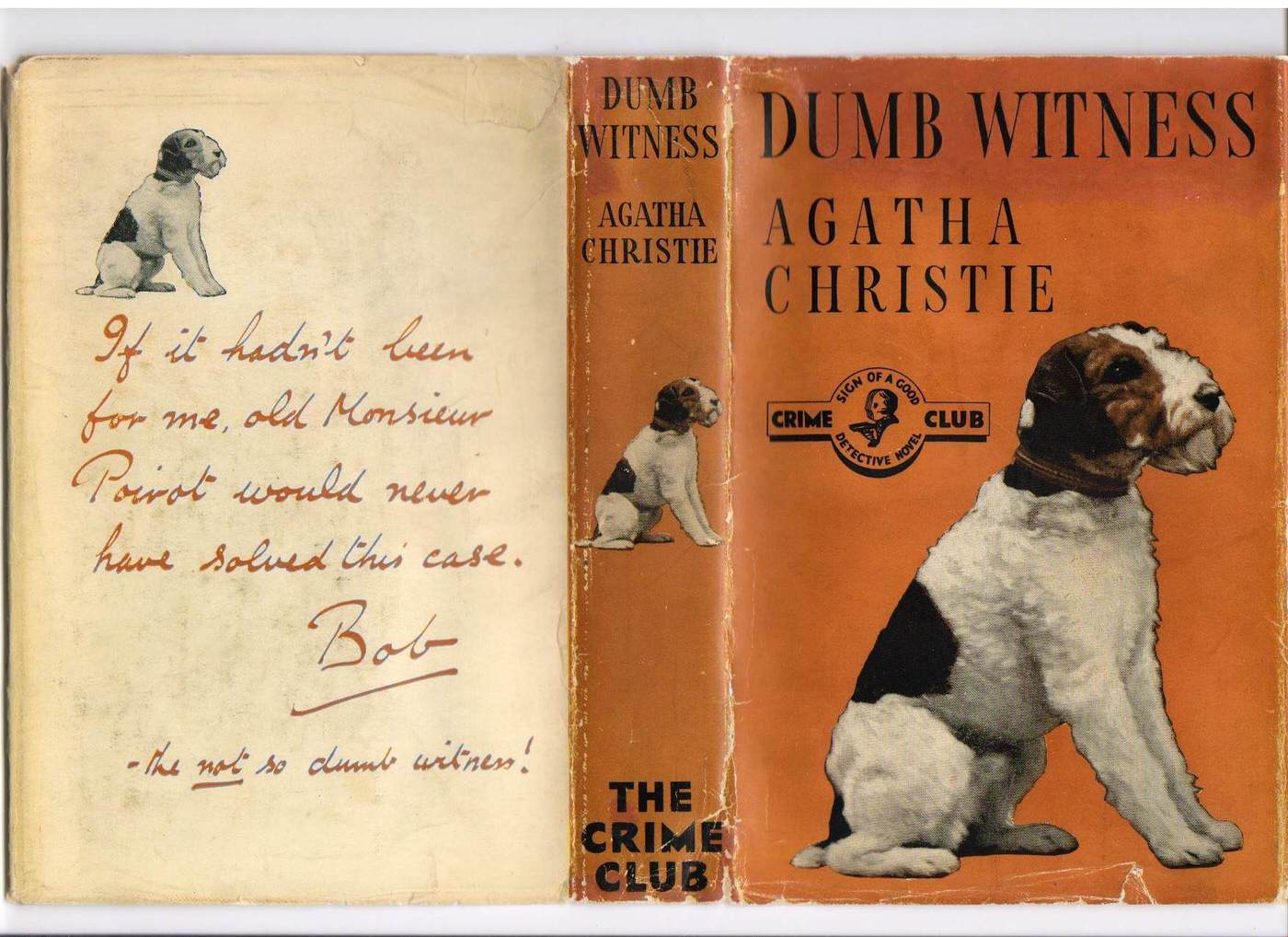
Warm orange boards and a watchful little dog set the tone on the cover of **Dumb Witness**, the first UK edition from 1937. The design is boldly typographic—“DUMB WITNESS” and “AGATHA CHRISTIE” in stark black—balanced by the seated terrier that hints at clues, loyalty, and misdirection. A “Crime Club” emblem sits proudly at centre, anchoring the book in a familiar interwar detective-fiction world while the worn edges and rubbed spine quietly testify to a life spent being read.
Open the book and the mood shifts from commercial polish to intimate ephemera: a front leaf with a small dog vignette and a handwritten inscription that references Poirot and “the not so dumb witness.” The ink, the casual underlining, and the signing flourish turn a mass-produced mystery novel into a specific object with its own journey—part gift, part keepsake, part artifact of reading culture. Even without pinning down who wrote it, that personal note adds a layer of history that collectors of vintage crime fiction prize.
For readers and bibliophiles alike, this image offers a satisfying close-up of 1930s dust jacket art, publisher branding, and the tactile realities of an original edition—creasing, scuffing, and sun-softened colour. It’s a strong visual companion for any post about Agatha Christie first editions, classic detective novels, and UK book collecting, especially for those drawn to how material details shape the story before a single page is turned. The “dumb witness” may be a dog, but the book itself becomes an equally eloquent witness to its era.