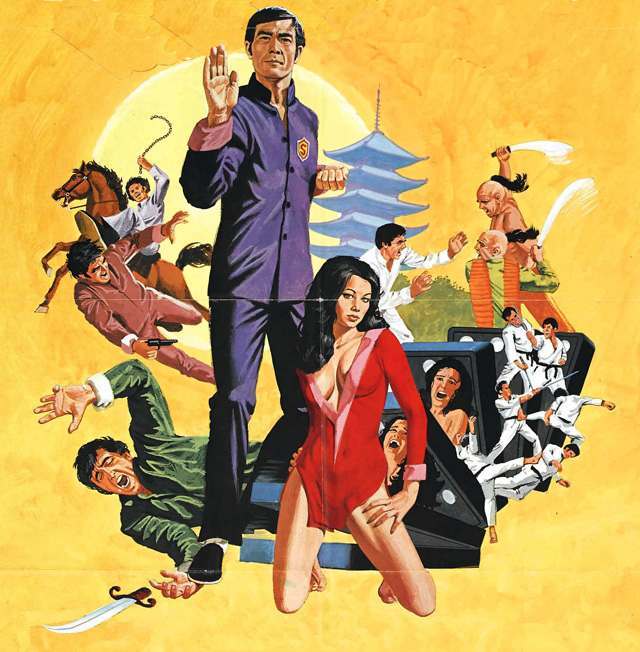
Boldly illustrated cover art like this reflects the early-1970s appetite for kung fu cinema, where a single commanding hero could anchor a whirlwind of action around him. A stern-faced martial artist in a dark uniform stands at center with a raised palm and clenched fist, projecting calm control amid chaos. Behind him, a pagoda silhouette and a warm, sunlit backdrop hint at a stylized “East-meets-West” fantasy that was common in international genre marketing.
Around the main figure, the composition erupts into vignettes: fighters in white uniforms launch synchronized kicks, a rider brandishes a whip, and blades flash in mid-swing. The collage-like arrangement emphasizes movement and spectacle, suggesting a plot packed with duels, ambushes, and set-piece brawls. Even without text on the image, the design language signals “kung fu adventure” in big, readable visual shorthand—perfect for attracting viewers scanning a poster rack.
Titled “Super Man Chu: Master of Kung Fu (1973),” this piece is a striking example of period poster illustration, mixing pulp drama, martial arts iconography, and high-contrast color to sell intensity at a glance. The prominent central pose, the surrounding crowd of antagonists and acrobats, and the dramatic female figure in the foreground all point to a marketing style that prized sensation and immediacy. For collectors and film-history fans, it’s a vivid snapshot of how 1970s kung fu films were packaged for audiences hungry for exoticized action and larger-than-life heroes.