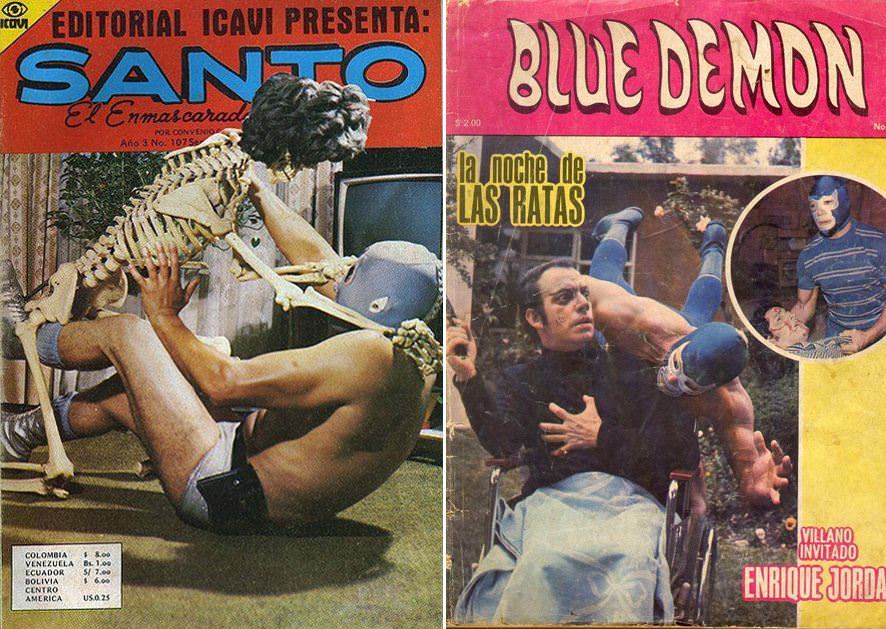
Lurid color, outsized typography, and masked heroes in mid-brawl—these covers drop you straight into the high-drama universe of Spanish and Italian crime comics and fotonovelas from the 1960s–70s. On one side, “SANTO” dominates the masthead above a staged wrestling struggle that leans into shock value and pulp spectacle; on the other, “BLUE DEMON” frames a chaotic scene with a circular inset, promising twists, danger, and a larger cast than a single panel can hold. Even before reading a word, the design language sells urgency: bright reds and yellows, bold letterforms, and action posed like a cliffhanger.
Fotonovelas blurred the line between comics and cinema by telling sensational stories with photographic sequences, often featuring performers posed as detectives, villains, or vigilantes. These covers suggest the genre’s favorite ingredients—masked identity, crime melodrama, and physical confrontation—packaged for quick consumption at kiosks and newsstands. The Spanish headlines, the theatrical staging, and the tabloid-like layout all hint at a mass-market culture where crime stories traveled across borders through striking visuals as much as through text.
For collectors and historians, cover art like this is a time capsule of popular entertainment, advertising strategies, and the aesthetics of pulp publishing in the postwar decades. The scuffs, fading, and print texture speak to objects that were handled, traded, and read to pieces, not preserved behind glass. If you’re exploring the world of 1960s–70s crime comics and fotonovelas, these examples show how sensational photography and graphic design worked together to hook readers—promising danger, mystery, and the next dramatic reveal.