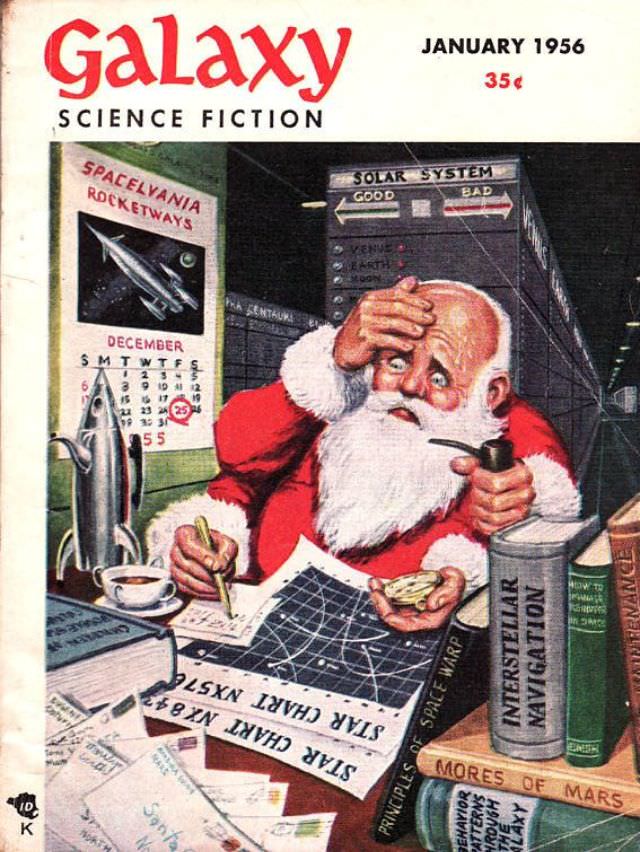
January 1956 arrives on the cover of *Galaxy Science Fiction* in bold red type, priced at 35¢, and the scene immediately leans into mid‑century whimsy: Santa Claus hunched at a cluttered desk, pipe in hand, looking more stressed than jolly. A wall calendar labeled “Spaceklania Rocketways” hangs beside a gleaming rocket, while a star chart and scribbled notes sprawl across the tabletop like last-minute holiday logistics—only these routes run through the heavens.
At the center, Santa wipes his brow as if the cosmos itself has become a scheduling nightmare, surrounded by paperwork that reads like interplanetary shipping manifests. Behind him, a control-board style chart labeled “Solar System” contrasts “Good” and “Bad,” nodding to the moral bookkeeping of Christmas while playfully reframing it as a science-fiction problem. The tidy iconography of rockets, charts, and office clutter evokes the era’s fascination with systems and planning—spaceflight imagined as a bureaucracy as much as an adventure.
As cover art, this *Galaxy* magazine illustration is a small time capsule of 1950s science fiction culture, when the Space Age was close enough to feel inevitable but still fantastical enough to invite jokes. The composition sells a story before a single page is turned, blending holiday folklore with rocket-era optimism and anxiety in one memorable tableau. For collectors and readers alike, the January 1956 issue stands out as a playful example of vintage science fiction cover art and the magazine’s talent for turning contemporary imagination into vivid, marketable spectacle.