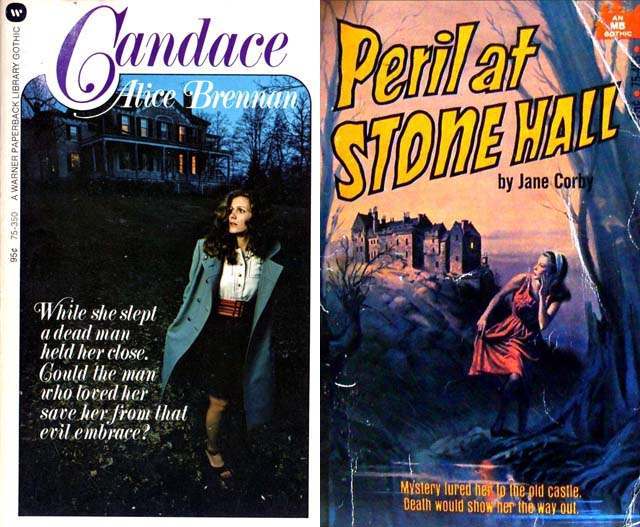
Against looming mansions and storm-dark skies, these Gothic romance cover illustrations lean hard into a familiar jolt: a woman caught mid-flight, glancing back as if the house itself were alive. On one cover, the heroine stands at the edge of a shadowed lawn beneath tall windows and bare branches, her posture poised between curiosity and escape. On the other, a figure in a long dress twists away from a distant stone building, the scene painted in anxious dusk colors that make the landscape feel cold, wide, and unsafe.
What makes the “woman running from the house” motif so psychologically compelling is how quickly it sets stakes without explaining them. A grand home promises shelter, inheritance, and domestic stability, yet here it becomes a threat—an architectural trap where romance and danger share the same doorway. That contradiction pulls the reader into an emotional puzzle: is the heroine fleeing a villain, a secret, a past, or her own desire, and why does turning back seem as inevitable as running forward?
Placed side by side, the covers also reveal the genre’s visual language—high-contrast lighting, isolated figures, and imposing buildings used as symbols of power and secrecy. The typography and dramatic taglines heighten the sense of peril, framing love as something that must be won through fear, resilience, and revelation. For anyone studying Gothic romance cover art, these images offer a compact lesson in how illustration, setting, and body language can sell suspense, longing, and the irresistible promise that the house holds answers.