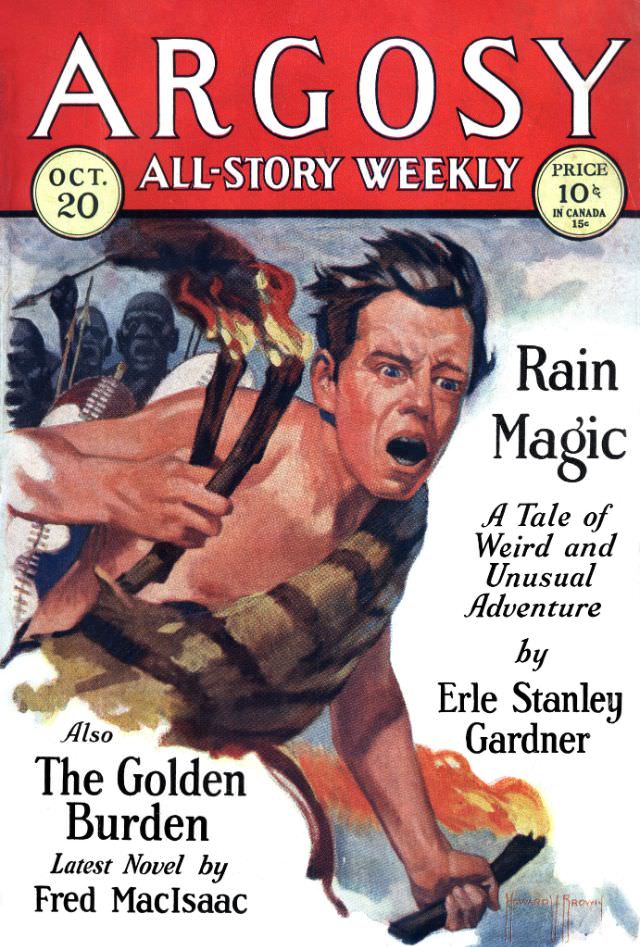
Argosy’s October 20, 1928 cover wastes no time plunging readers into peril, with a wide-eyed runner bursting forward through smoke and fire, clutching a lit torch as if the next step could be his last. The bold red masthead and crisp, high-contrast illustration style are classic hallmarks of the pulp era, designed to grab attention on a crowded newsstand and promise fast, visceral storytelling. Even the small printed details—“All-Story Weekly” and the 10¢ price—anchor this artwork in the everyday world of mass-market entertainment.
At the right, the featured title “Rain Magic” is set in large type, billed as “A Tale of Weird and Unusual Adventure,” with author credit to Erle Stanley Gardner, signaling the magazine’s appetite for the uncanny and the exotic. Behind the fleeing figure, shadowed pursuers and a backdrop of flames intensify the sense of chase and danger, while the painterly color palette leans into drama rather than realism. It’s a smart piece of cover art: the composition funnels the eye from the action to the typography, turning story promotion into visual suspense.
Collectors and readers alike often return to covers like this because they preserve the mood of 1920s pulp fiction—breathless stakes, sensational headlines, and illustration that functions as a movie poster for the imagination. The lower text callout for “The Golden Burden” by Fred MacIsaac hints at the variety packed inside, reinforcing Argosy’s reputation as a weekly showcase for popular adventure narratives. For anyone exploring magazine history, vintage cover art, or the design language of early genre publishing, this issue offers a vivid snapshot of how stories were sold before paperbacks and television took over.