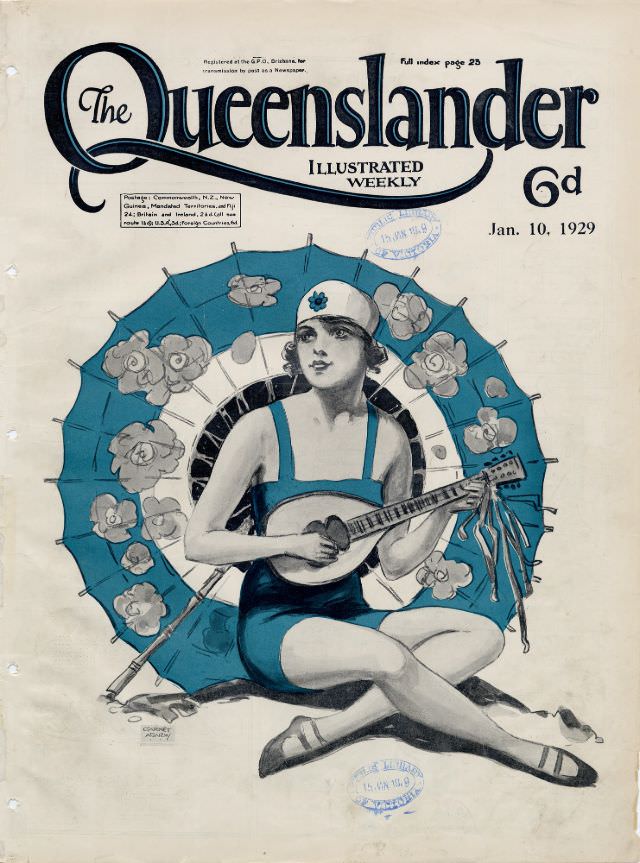
Bold, looping typography crowns the page with “The Queenslander” and the promise of an “Illustrated Weekly,” immediately setting the tone for a publication that traded as much in style as in news. The cover is carefully balanced: pricing and date sit to the right, while the central artwork dominates, framed by the clean, open space that makes early magazine design so striking. Even the faint library-style stamps and small printer’s notes become part of the object’s story, evidence of how this issue traveled, was handled, and ultimately preserved.
At the heart of the composition, a fashionable young woman in a swim costume sits posed with a small stringed instrument across her lap, her gaze turned outward as if caught between performance and daydream. Behind her, a large parasol blooms into a decorative halo, punctuated with floral motifs that echo the era’s love of ornament and modern leisure. The limited palette—cool blues against warm paper—adds a crisp, seaside freshness that feels perfectly tuned to a summer issue.
January 10, 1929 places this cover in the late interwar years, when illustrated weeklies helped shape popular taste through imagery as much as reportage. The artwork suggests a world of beaches, music, and modern womanhood—aspirational, relaxed, and distinctly of its moment—while still carrying the meticulous graphic discipline of print culture in Queensland. For collectors, designers, and social historians alike, this front cover from The Queenslander offers a vivid window into 1920s Australian magazine art and the visual language of leisure that readers would have met on the newsstand.