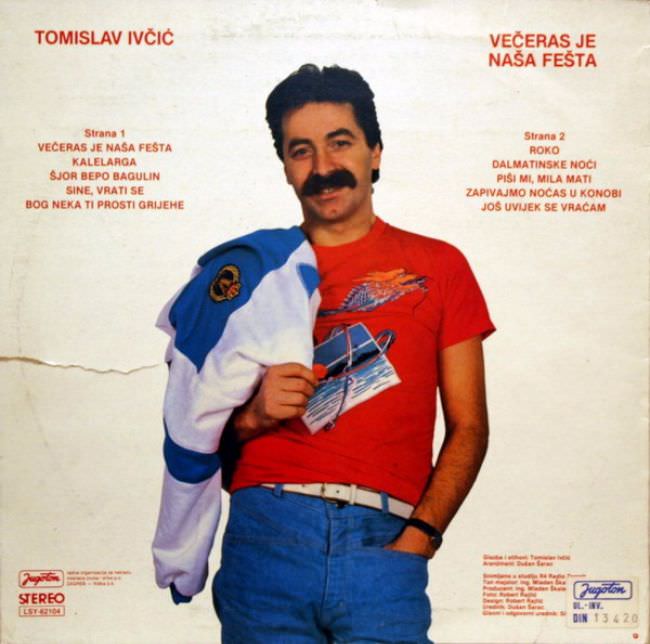
A cream-colored sleeve, already creased and scuffed like something pulled from a long-loved record crate, frames a studio portrait that leans hard into late-20th-century pop bravado. The singer stands front and center in a bright red graphic T-shirt and high-waisted blue trousers, a white belt cinched tight, while a sporty jacket is slung over one shoulder for that casual “caught between rehearsal and night out” pose. Bold red typography anchors the top, with the album title “Večeras je naša fešta” and the name Tomislav Ivčić set against a bare background that leaves nowhere to hide.
Text does much of the heavy lifting, listing tracks in neat columns labeled “Strana 1” and “Strana 2,” an unmistakable artifact of the LP era when the back cover had to sell the mood and provide the map. The design is blunt, functional, and oddly intimate—part advertisement, part personal calling card—yet the choices feel frozen in a very specific moment of Yugoslavian cover art: minimal studio setup, maximal confidence, and typography that reads like a poster shop default. Even the visible wear—fold lines and small stains—adds to the authenticity, hinting at how these records circulated through homes, parties, and hand-me-down collections.
For anyone digging into Yugoslav music history of the 1970s and 1980s, this kind of album artwork is a revealing window into taste, technology, and the economics of print design. It’s easy to laugh at the awkward styling or the stark layout, but the “ugly truth” is often more interesting: limited budgets, quick turnarounds, and a domestic market that favored recognizability over conceptual polish. As a piece of retro record cover design, it’s both a snapshot of an era’s visual language and a reminder that pop culture often looks its most honest when it’s trying a little too hard.