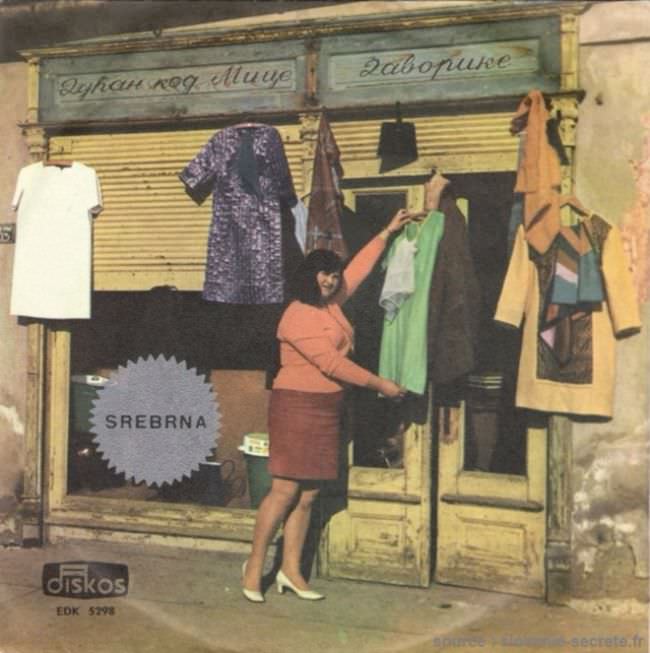
A shopfront with weathered signage in Cyrillic becomes an unlikely stage for the kind of Yugoslav album cover art that still sparks debate today. Dresses and coats hang like improvised billboards across a rolling shutter and doorframe, while a woman poses mid-gesture as if she’s presenting the merchandise—or selling a mood. The central “SREBRNA” badge and the small “diskos” mark at the corner underline that this isn’t merely street photography; it’s packaging, designed to catch the eye from a record bin.
What makes the aesthetics feel “ugly,” at least by modern expectations, is the deliberate plainness: everyday clothing, harsh midday color, and a composition that favors blunt realism over glamour. Yet that roughness can also read as honesty, a reflection of small-town storefronts, practical fashion, and the do-it-yourself visual language common to 1970s and 1980s Yugoslav record sleeves. The result is a kind of accidental surrealism, where ordinary retail display turns into pop culture iconography.
For collectors and design historians, images like this help explain why Yugoslavian cover art remains so searchable and so shareable: it sits between documentary and advertisement, between local texture and mass reproduction. The faded paint, mismatched garments, and direct pose all tell a story about constraints—budget, printing, and access—while also revealing a unique regional character that polished Western sleeves often lacked. If you’re tracing Balkan graphic design, socialist-era consumer culture, or the quirks of vintage album packaging, this cover offers a compact lesson in how “bad taste” can become lasting visual history.