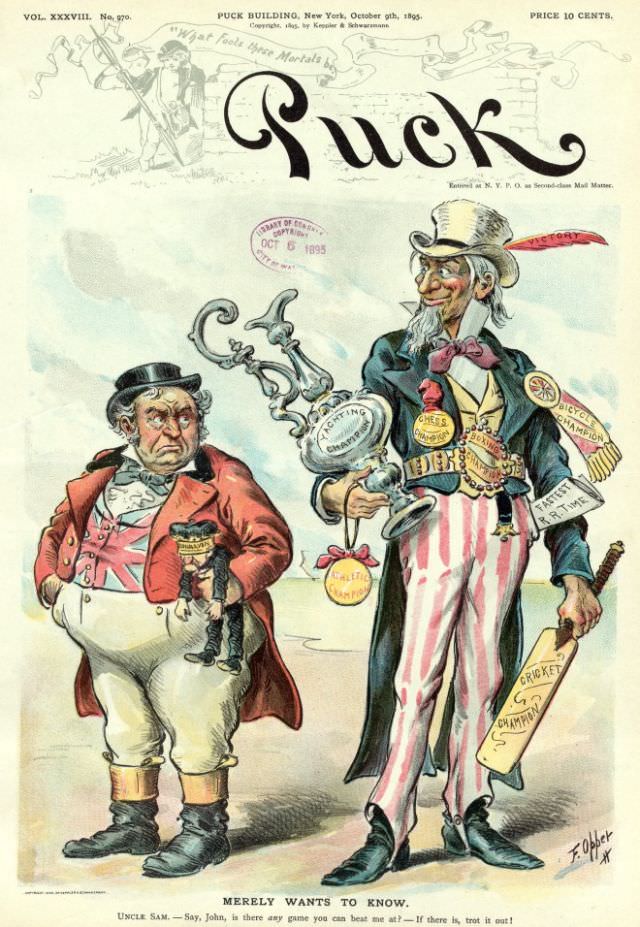
Boldly lettered “Puck” sweeps across the top of this October 9, 1895 cover, framing a sharply drawn political cartoon in full color. The familiar figure of Uncle Sam stands at right in a tall hat and striped trousers, outfitted like a walking trophy case: medals, ribbons, and placards proclaiming “Bicycle Champion,” “Chess Champion,” “Boxing,” “Cricket Champion,” and more. Opposite him, a stocky John Bull—Union Jack waistcoat peeking out beneath a red coat—glowers while clutching a small figurine, the contrast setting up an unmistakable rivalry.
J. S. Pughe’s satire turns national pride into a visual inventory, using sporting emblems to suggest victory, boasting, and the urge to keep score. Uncle Sam’s confident smile and the plume labeled “Victory” read as triumphant swagger, while John Bull’s tight expression and guarded posture imply irritation at being upstaged. Even without reading every caption, the cover’s props—trophies, paddles, and dangling awards—telegraph the late 19th-century fascination with competition, modern pastimes, and international one-upmanship.
Collectors of Puck magazine cover art will recognize the publication’s knack for packing big arguments into an instantly readable scene. The masthead details “Puck Building, New York,” the issue date, and the “Price 10 cents,” grounding the cartoon in the bustling world of Gilded Age American print culture. For anyone researching political cartoons, Uncle Sam imagery, or the history of satire in the 1890s, this cover offers a vivid snapshot of how humor and illustration shaped public conversation.