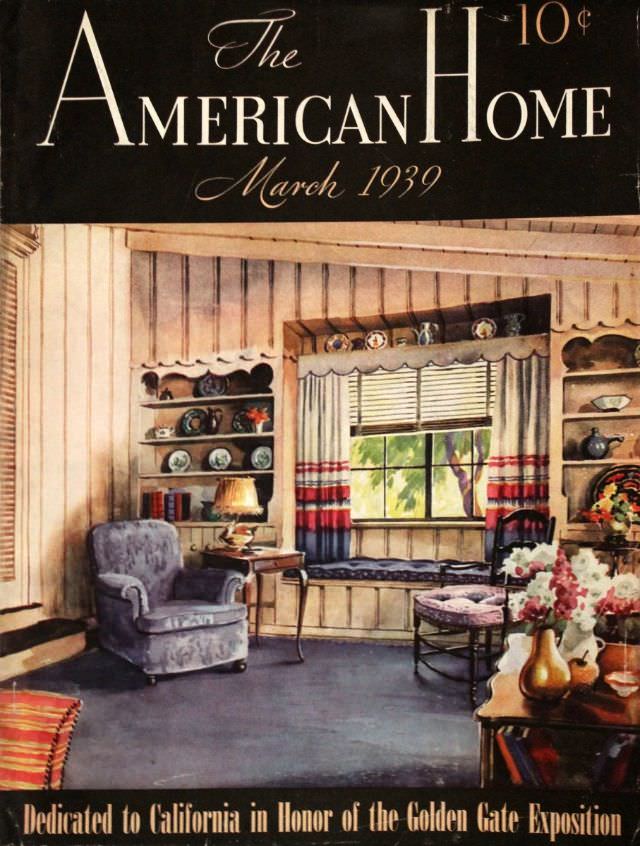
Warm typography and a bold 10¢ price frame the March 1939 cover of *The American Home*, inviting readers into an idealized living room where comfort is carefully staged. A deep upholstered armchair anchors the left side, while built-in shelves display ceramics and small objects meant to signal taste, tidiness, and domestic pride. The scene reads like a promise: a well-ordered home as both refuge and aspiration on the eve of a changing decade.
At the center, a window seat steals the show, dressed with striped curtains and a scalloped valance that softens the geometry of the wood-paneled walls. Sunlight seems to spill in from a leafy view outside, making the room feel airy despite the snug arrangement of furniture and décor. Details such as the small side table lamp, the patterned rug edge, and the curated shelf displays evoke the magazine’s practical fantasy of everyday elegance.
Along the bottom, the dedication “to California in honor of the Golden Gate Exposition” ties this cover art to a broader moment in American cultural life, when fairs and expositions celebrated progress, style, and regional identity. For collectors of vintage magazines, interior design historians, or anyone drawn to 1930s home décor, this cover offers a vivid snapshot of period aesthetics—paneling, built-ins, and coordinated textiles presented as the modern American standard. It’s a compact lesson in how magazine illustration sold not just rooms, but ideals of living.